
The Security Service of Ukraine said the Ukraine sea drone mothership was used to deploy uncrewed surface vessels that struck a Russian Navy corvette and a cargo ship off Benghazi on Sunday. The assertion marks what appears to be the first official indication from Kyiv that a vessel at sea has been used to deliver attack USVs. The claim does not independently confirm a mothership’s use and could be intended to obscure other launch sites, but it is seen as plausible.
The account from Ukraine differs from statements issued Sunday about where the attack originated. Libyan authorities said the USVs launched from a base on their territory, while a separate claim that the drones sailed from Albania was later denied. Analysts have long assessed that Ukraine could employ motherships to release USVs at range, especially in the Black Sea, and in this case a sea-based launch was raised as a likely scenario.
New Details On The Benghazi Sea Drone Attacks
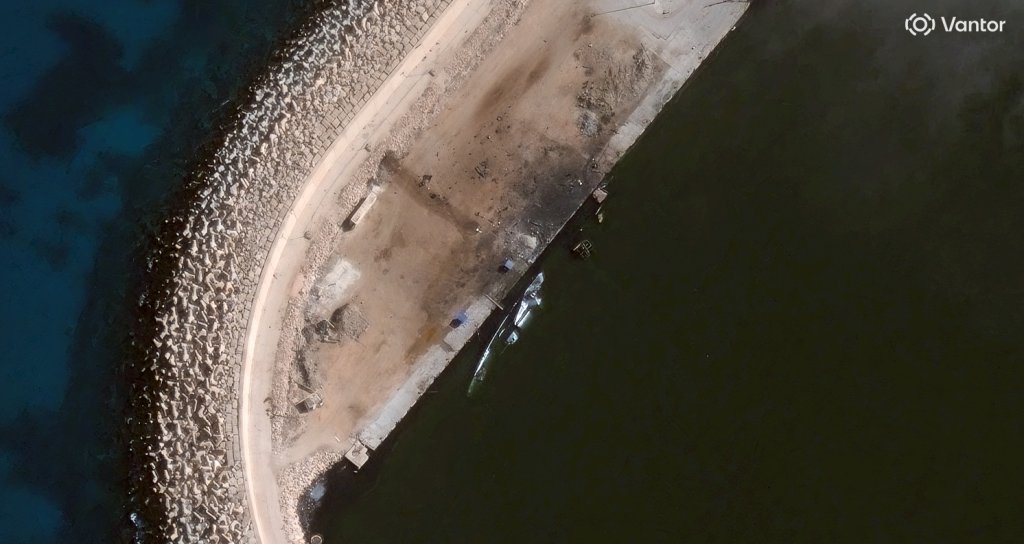
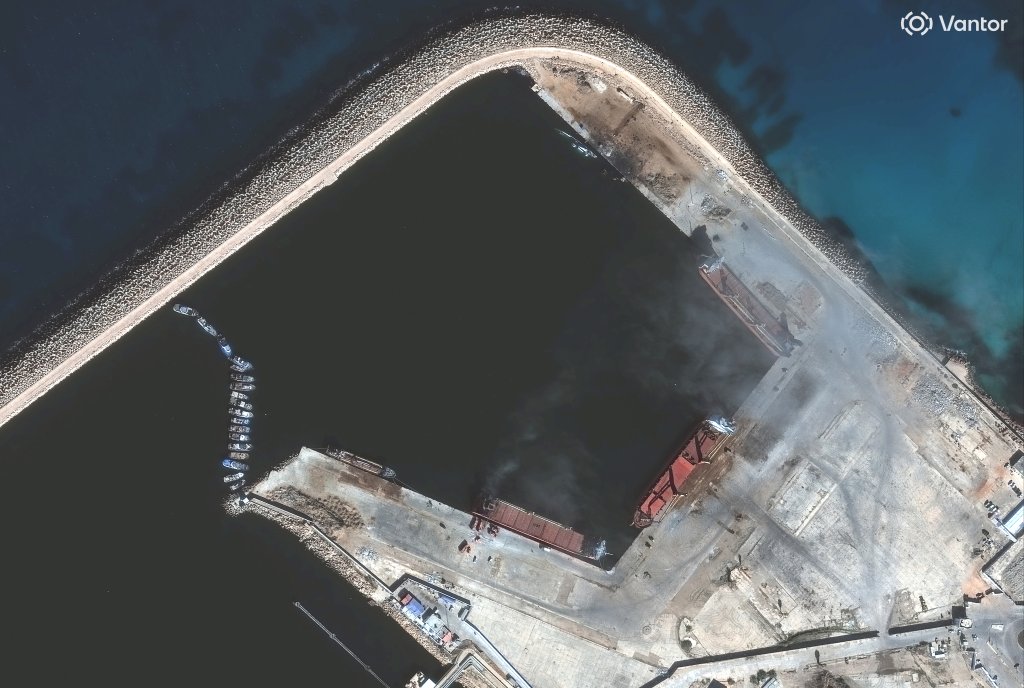
As reported earlier, the Project 20380 Steregushchiy class corvette Merkury sank after being hit by USVs while alongside a pier in Benghazi. A cargo ship was also struck outside the port.
On Monday, the SBU released additional information on the operation.
According to the SBU, Ukrainian defense forces conducted a special operation against two Russian-linked targets near the Libyan port, naming the dry-cargo vessel MV Angara, which it said transported Russian military equipment, and the multi-purpose corvette Merkury that it said regularly escorted hostile convoys including the Angara.
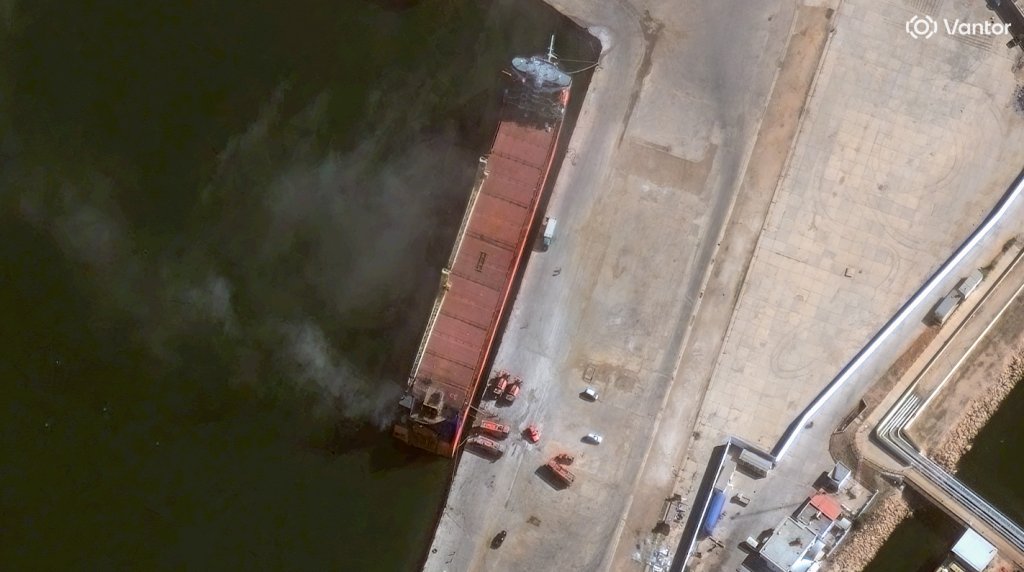
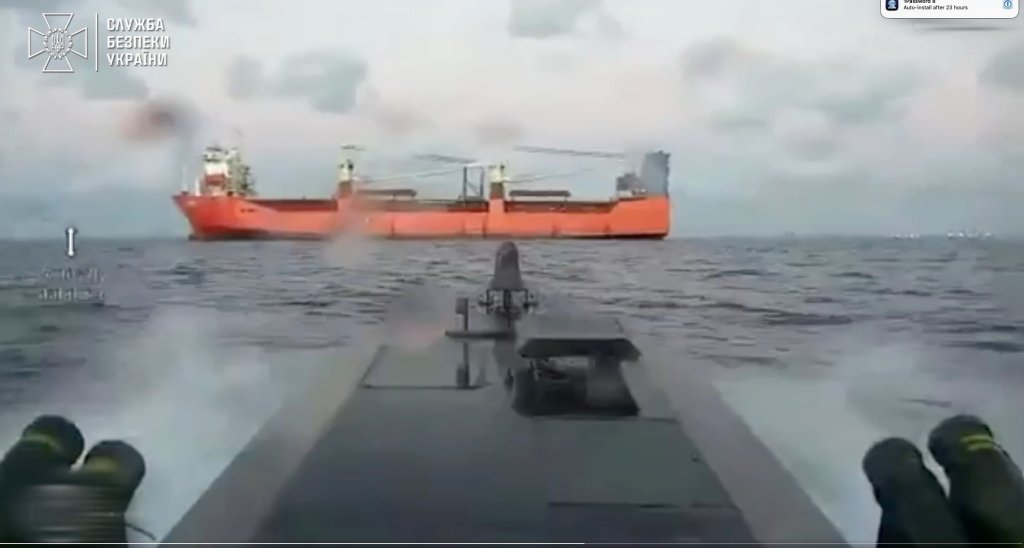
The SBU said both vessels were legitimate military targets supporting Russia’s capabilities. It stated that seven Ukrainian-made USVs were transported to the area and launched from a “mothership,” and that the drones reached and struck their objectives despite attempts to stop them from the air, sea, and land.
The agency said the attack destroyed the corvette Merkury, hull number 734, a Project 20380 ship assigned to Russia’s Black Sea Fleet that entered service in 2023. It added that a Ka-27 helicopter aboard the ship was lost. The second target, the SBU said, was the MV Angara, identified by IMO number 9179842, which it described as part of the so-called Syrian and Libyan Express logistics routes. The SBU said the operation demonstrated that Russian fleet and logistics assets face risk well beyond the Black Sea. It did not disclose the mothership’s type or location.
In a post on X, Ukrainian President Volodymyr Zelensky shared SBU video showing a sea drone’s perspective of a large explosion on the corvette. The feed then shows an approach to Merkury amidships to port followed by another angle capturing a fireball. A third approach appears before the clip cuts to distant views of the ship ablaze.
The video also depicts a sea drone striking Angara on the port stern, followed by aerial imagery of the vessel on fire. Initial reports Sunday had misidentified the cargo ship as Ascalon, which resembles Angara.
An exemplary Ukrainian operation in response to Russia’s war, Zelensky said in the post, thanking the SBU and other defense forces that took part.
By Monday, authorities in Libya had blocked the section of Benghazi harbor where Merkury sank, positioning small boats to seal off the area from within the port.
Following earlier Ukrainian USV attacks, Russia installed layered barriers across harbor entrances and around vessels, and placed similar passive defenses around infrastructure like the Kerch Bridge. Such measures are now widely observed elsewhere.
Video from 2023 shows a Ukrainian USV halted by booms at Sevastopol’s harbor entrance before exploding, while two others vaulted the barriers and were destroyed inside the port.
Commentary on X noted the absence of standard passive protection around Merkury in Benghazi, which made the corvette an attractive target for Ukrainian clandestine units operating in the Mediterranean.
Competing Claims Around The Ukraine Sea Drone Mothership
As stated at the outset, a wire service report on Sunday said the USVs were launched from a base run by Ukrainian forces in western Libya, citing an initial probe. At the time, it could not be confirmed whether the drones came from land or a vessel.
Another claim suggested the launch point was Albania, roughly 530 miles north of Benghazi. Albania’s Ministry for Europe and Foreign Affairs publicly rejected that assertion, saying its territory was not used and calling for corrections from those spreading the allegation.
What is clear is that a launch from Ukraine’s shoreline is highly unlikely. Benghazi is about 1,300 miles from the nearest feasible Ukrainian embarkation point. That route would require crossing the Black Sea, passing the Bosporus, then the Aegean and central Mediterranean. No party has alleged such a transit. The drones were almost certainly dispatched from much closer, likely from a ship operating in the Mediterranean, where Ukraine-linked clandestine activity against Russian naval interests has been documented.
Imagery from the raid indicates a variant of the Sargan 3000 USV was used, an identification first highlighted by naval analyst H.I. Sutton. In September reporting, the Sargan 3000 was described as 6.9 meters long and 2.2 meters wide, with up to a 1,600-kilometer operational radius, payload capacity of about 450 kilograms, and an estimated top speed between 40 and 55 knots.
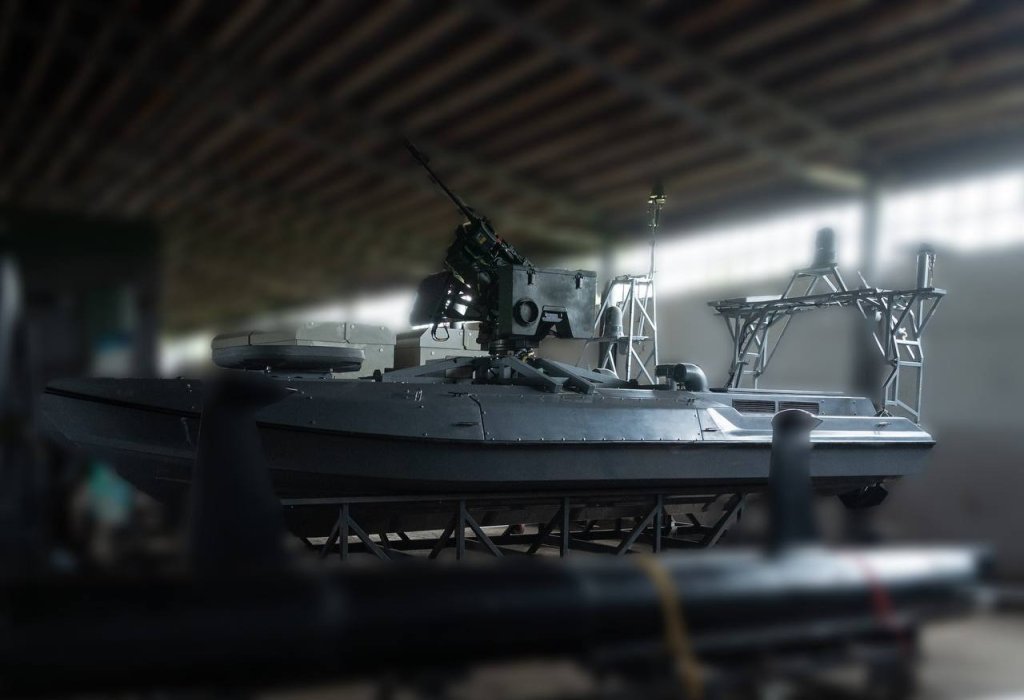
The SBU video also shows the USV that hit the cargo ship fitted with at least two tubes mounted along each side of the hull. It is unclear whether they were intended for weapons or countermeasures such as smoke.
Ukraine could also be citing a mothership to mask activity inside Libya or elsewhere in the region, a more politically sensitive prospect than launching from international waters. Reports of Ukrainian presence in Libya have figured in disputes between rival factions there.
Libya has faced persistent conflict since a NATO-led intervention helped topple Muammar Gaddafi in 2011. The internationally recognized Government of National Unity controls the northwest, while the Libyan National Army under Khalifa Haftar holds much of the east.
Haftar’s camp, which is supported by Russia, said Monday the attacks violated Libyan sovereignty and called for an international investigation into reports of Ukrainian personnel, experts, or military units in western Libya, according to AFP. The outlet said officials cited information suggesting possible Ukrainian units near Misrata, Zawiya, and other areas, and local reports indicated similar elements may operate around Tripoli.
Ukraine sea drone mothership and the drive for launch platforms
Analysts first raised the prospect in 2022 that Ukraine could use a mothership to deploy USVs as it expanded its drone-boat campaign against Russia’s Black Sea Fleet. Numerous successful USV strikes on fleet vessels and infrastructure helped push many Russian assets from occupied Crimea to bases such as Novorossiysk, which have also come under attack since.
The United States, China, Iran, and others have fielded or developed sophisticated motherships to launch USVs, uncrewed underwater vehicles, and aerial drones. Yet purpose-built platforms are not required for small surface drones. Fishing trawlers or small cargo ships can deploy them discreetly, blending into normal maritime traffic. That allows surprise attacks and lets the launch vessel continue covert operations far from home ports.
What Ukraine’s mothership looks like remains unknown. If it exists, it may be indistinguishable from ordinary commercial traffic.