
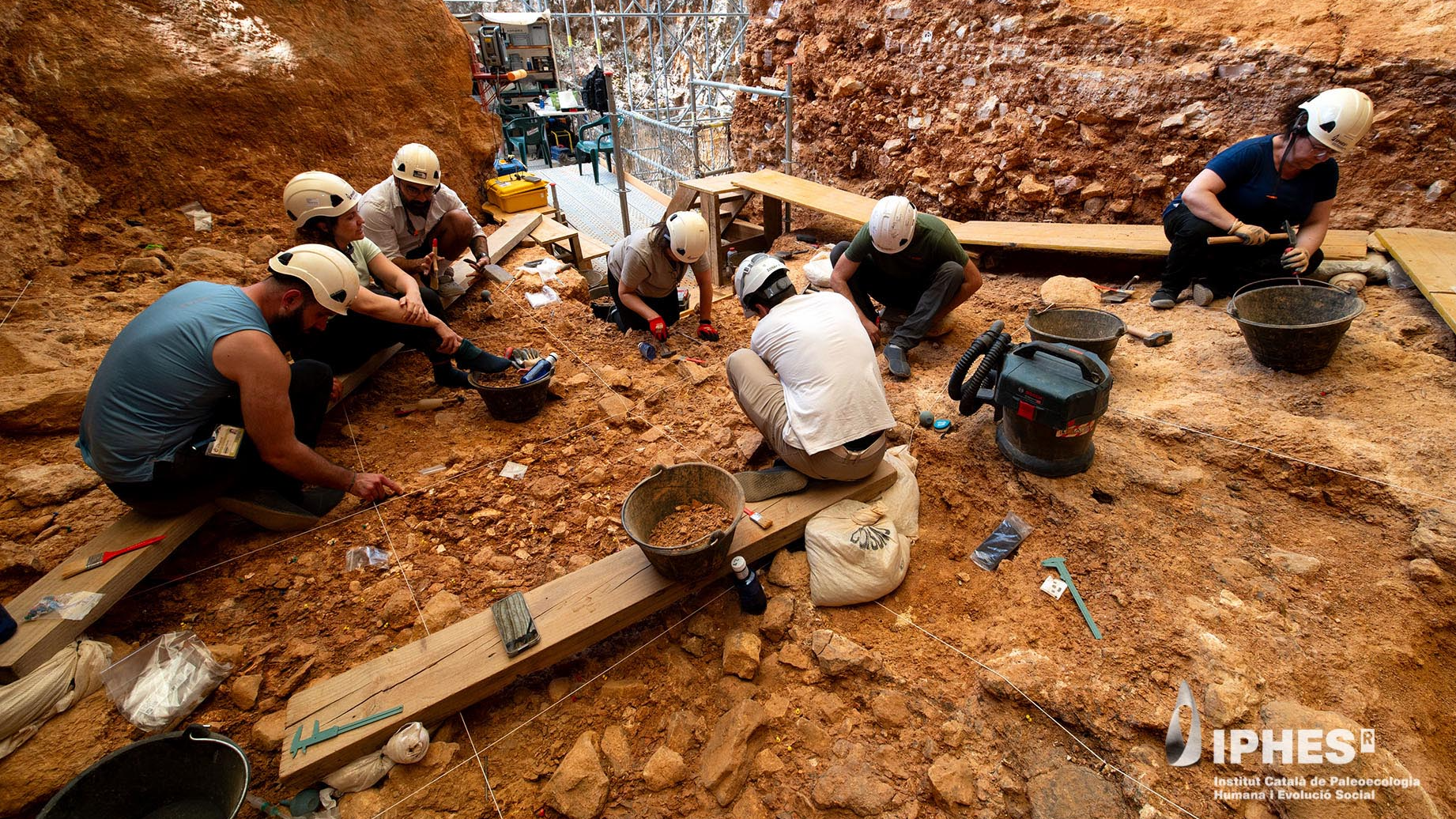
Homo antecessor cannibalism has been documented again at a cave site in northern Spain, and newly analyzed fossils indicate the practice included adults as well as children around 850,000 years ago, according to researchers.
The latest two dozen bones and teeth were unearthed in the Gran Dolina cave within the Sierra de Atapuerca archaeological complex, the Catalan Institute of Human Paleoecology and Social Evolution reported on July 24. The finds include fragments of skull, vertebrae, arm and leg bones, and three teeth from several individuals of the extinct species Homo antecessor, which lived in Europe between roughly 1.2 million and 770,000 years ago. Multiple fragments bear cut marks made by stone tools.
Previous work at Gran Dolina documented repeated episodes of cannibalism, positioning Homo antecessor as the oldest known human relative to consume members of its own group for nutritional purposes. A 2010 study suggested most of the remains showing such treatment belonged to infants and juveniles, who may have been easier targets within rival groups. The new fossils broaden that picture.
“The discovery of more adult individuals, some of whom also bear cut marks, demonstrates that cannibalism was not restricted to younger individuals,” said Palmira Saladié of the Catalan Institute of Human Paleoecology and Social Evolution.
With the new material, the minimum number of individuals represented at Gran Dolina has risen to at least 13, about half of them adults. “The increase in the number of individuals, and especially the addition of more adults, allows us to begin understanding this population from a much more complete perspective than ever before,” said archaeologist Andreu Ollé.
Excavations have also yielded a toolkit of flint, quartzite and sandstone artifacts, along with animal remains from hyenas, beavers, deer, horses and rhinoceroses. Researchers note that the stone tools correspond to the cut marks on human bones, and butchery methods identified on animal remains match those observed on human remains. Some human bones preserve human bite marks, which Saladié has described as the strongest indicator that bodies at the site were consumed.
While the presence of cannibalism is well established, the motivations remain uncertain. Investigators hope the addition of adult remains will clarify patterns within Homo antecessor groups at Gran Dolina.
“We have only just begun excavating this new area, and the first results already demonstrate its enormous scientific potential,” said archaeologist Marina Mosquera.
Ongoing analyses aim to assess age-related differences in cannibalism, the frequency and duration of such events, and aspects of social organization in Homo antecessor, according to the institute.
Homo antecessor cannibalism at Gran Dolina
Researchers plan further studies of the newly recovered bones and tools to refine timelines and behavioral interpretations at the Sierra de Atapuerca site. Similar work linking ancient remains and social practices has been reported in findings such as the Temple of Artemis burial reveals premature twin infants.
Gran Dolina is part of the broader Atapuerca archaeological complex, a UNESCO World Heritage site that has yielded some of the most important human fossils in Europe.