
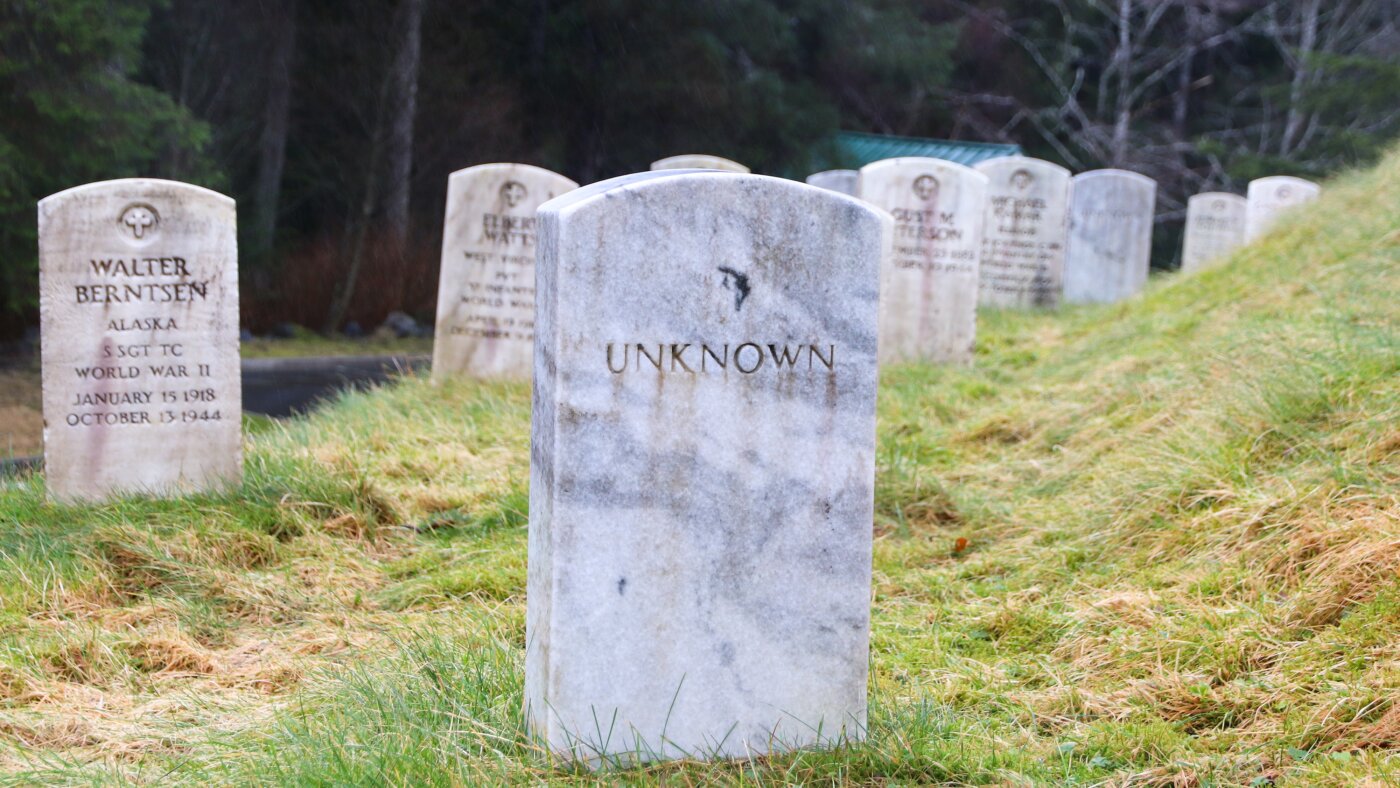
Unidentified soldier X-3 was carried from Sitka National Cemetery in Alaska in late June as service members and first responders stood at attention, marking the disinterment of remains believed to date back more than 80 years.
Officials said X-3 is among over 81,000 U.S. service members still unaccounted for from past conflicts, most from World War II, the Korean War, and the Vietnam War. Although few cases originate on U.S. soil, the Department of Defense notes that Hawaii and Alaska, both WWII theaters, have higher numbers of unresolved burials. About 120 unidentified service members are in Alaska and more than 1,900 in Hawaii, according to the department.
World War II plane crash in the Aleutians
The trail to X-3 leads to June 3, 1942, when Japan bombed Unalaska, also known as Dutch Harbor, roughly 800 air miles from Anchorage. The U.S. military surged forces to the Aleutians in response. During that period, a twin‑engine C-53B crashed near Cold Bay on the north side of the Alaska Peninsula. All 16 aboard died, said local historian Michael Livingston, who has studied WWII operations in the region.
Ten men and the aircraft were never found. A local fur trapper discovered six bodies that had washed ashore and buried them temporarily, Livingston explained. The military later reburied the remains in a local cemetery, and after the war most were moved to their home communities. One man could not be identified at the time and became known as X-3.
“He was moved to Sitka,” Livingston said, adding that advocates have pressed for years to put a name to X-3.
“Could it be my uncle? Yes. Could it not be? Yes.”
In Texas, 71-year-old Chris Pfeiffer has long searched for answers about his grandmother’s brother, 2nd Lt. Eugene Christensen of Nebraska, who was aboard the flight. Pfeiffer said Christensen attended college for a year before enlisting in the U.S. Army Air Forces, the predecessor to the U.S. Air Force, at age 21. Less than a year later, he was lost in the crash.
Pfeiffer, a military veteran, compiled hundreds of pages of records on the incident and petitioned the government to exhume X-3. He hopes the effort will resolve decades of uncertainty. “Could it be my uncle? Yes. Could it not be? Yes. We have to manage our expectations on this,” he said. He added that multiple family members died without learning what happened and wishes the request had been granted sooner.
Unique and challenging disinterment
A Defense POW/MIA Accounting Agency team, including an archaeologist, an odontologist, a medic, and senior planner Aaron Cummings, spent several days hand digging the hillside grave at Sitka National Cemetery. Cummings said the operation posed unusual risks. The casket, buried since 1948 in saturated ground, could have shifted over time. The day before, a separate attempt to exhume another unknown from an unrelated case reached 10 feet without finding a burial. In X-3’s case, remains were located about three feet below the surface.
“It was a very successful, respectful, and honorable extraction. We had challenges with X-3, but ultimate success,” Cummings said. He noted that the remains were well preserved inside a metal-lined wooden casket.
The DPAA has reviewed the case since 2017, Cummings said, but limited resources slowed progress until Pfeiffer’s outreach helped elevate its priority. The agency will now combine historical records with dental analysis and DNA testing in an effort to identify the service member and arrange a final burial.
If X-3 is confirmed as Christensen, Pfeiffer hopes to inter his great uncle in a Lutheran cemetery in Nebraska alongside family. Regardless of the outcome, Cummings said the work reflects a national commitment to account for the missing. “It’s important for the closure of the families to know that we will always try to bring our folks home and honor our nation’s fallen,” he said.
The operation in Alaska comes as other federal efforts, including high-profile oversight of the Department of Justice, continue to shape public views of government accountability. For families like Pfeiffer’s, the X-3 case underscores how that commitment extends across generations.