
France- and US-based ag biotech firm Micropep has advanced toward commercialization of Promisin, its peptide-based biofungicide, by submitting regulatory applications in the United States and the European Union this week.
The filings follow recent submissions in Paraguay and Brazil, which send a strong signal to external stakeholders, according to Dr. Kevin Leiner, Micropep’s vice president of regulatory. He said the step demonstrates the capabilities of the company and its Krisalix discovery platform to progress product candidates to market readiness.
Promisin is the first product emerging from Krisalix, Micropep’s AI-enabled discovery platform that combines computational biology, artificial intelligence, and formulation science to identify optimal micro-peptide sequences for crop protection. Leiner said the regulatory move reflects Micropep’s shift from a research-focused operation to an organization preparing for commercial launch.
Fighting fungicide resistance with peptides
Leiner said Promisin uses a novel biological mode of action to combat fungal diseases in crops and is intended to complement, not replace, conventional fungicides. It is positioned to help manage fungicide resistance, which has risen steadily since the 1970s.
Most conventional fungicides are site-specific, targeting a single metabolic pathway. A single genetic change in that pathway can reduce a fungus’s sensitivity to a chemical and undermine its effectiveness.
Promisin belongs to a class of peptides that disrupt cell membranes rather than binding to a single target, Leiner said. Because of this mode of action, he said it would be very difficult for organisms to develop resistance to Promisin peptides.
He added that this peptide class integrates well with existing pest management programs. Promisin can be tank-mixed with other solutions to deliver multiple modes of action, which can improve control and reduce the risk of resistance developing. Leiner said what is lost against a conventional fungicide can be addressed by Promisin to manage resistant strains.
Beyond resistance management, Leiner said the product has demonstrated strong performance in hundreds of field trials worldwide over multiple years. He also cited a highly favorable safety and sustainability profile, noting limited concerns for non-target organisms and strong human and environmental safety indicators. He said the company does not anticipate issues with persistence, residues, or the need for maximum residue limits compared with some small-molecule conventional pesticides.
Towards commercialization of Promisin
Leiner, who joined Micropep when it was largely a discovery-led company, described the filings as a milestone marking the end of development for initial crops and the start of a pre-commercial phase.
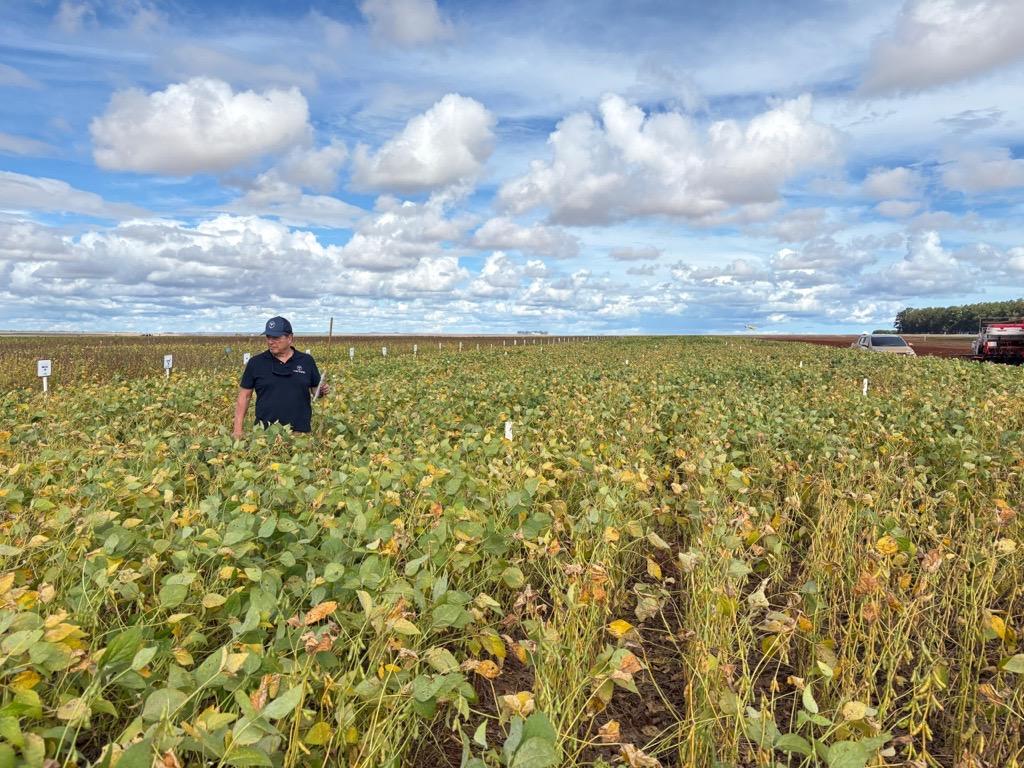
In Paraguay and Brazil, Micropep will focus on soybeans and other row crops, targeting Phakopsora pachyrhizi (Asian soybean rust), Corynespora cassiicola (Target Spot), and Cercospora kikuchii (Leaf Blight). In the United States, the company plans to prioritize row crops along with grapevines and potatoes.
In Europe, where soybean production is smaller, efforts will center on grapevines and potatoes.
Last year, Micropep appointed Georg Goeres as chief executive officer. Goeres, who previously led the biologicals unit at Indigo Ag, will steer the company’s commercialization efforts.
Regulatory review timelines will vary by region. Brazil typically moves faster than the European Union, with approvals taking about 18 months compared with several years in the EU.
In parallel, Micropep plans to prepare for market entry by building supply chains and establishing distribution partnerships so it can launch quickly once authorizations are granted in each country, Leiner said. The company will continue advancing fungicide programs and will also explore peptides with potential as herbicides and insecticides.
The focus on soybeans and other row crops comes as many producers weigh new tools to maintain yields under shifting environmental pressures, including disease and climate stress. Some growers are also turning to practices such as interseeding cover crops to bolster soil health alongside emerging biological products.
As Micropep advances Promisin and its broader peptide pipeline, the company’s approach adds to a growing wave of biological crop protection strategies. Additional information on the company’s technology and products is available on the official Micropep website.