
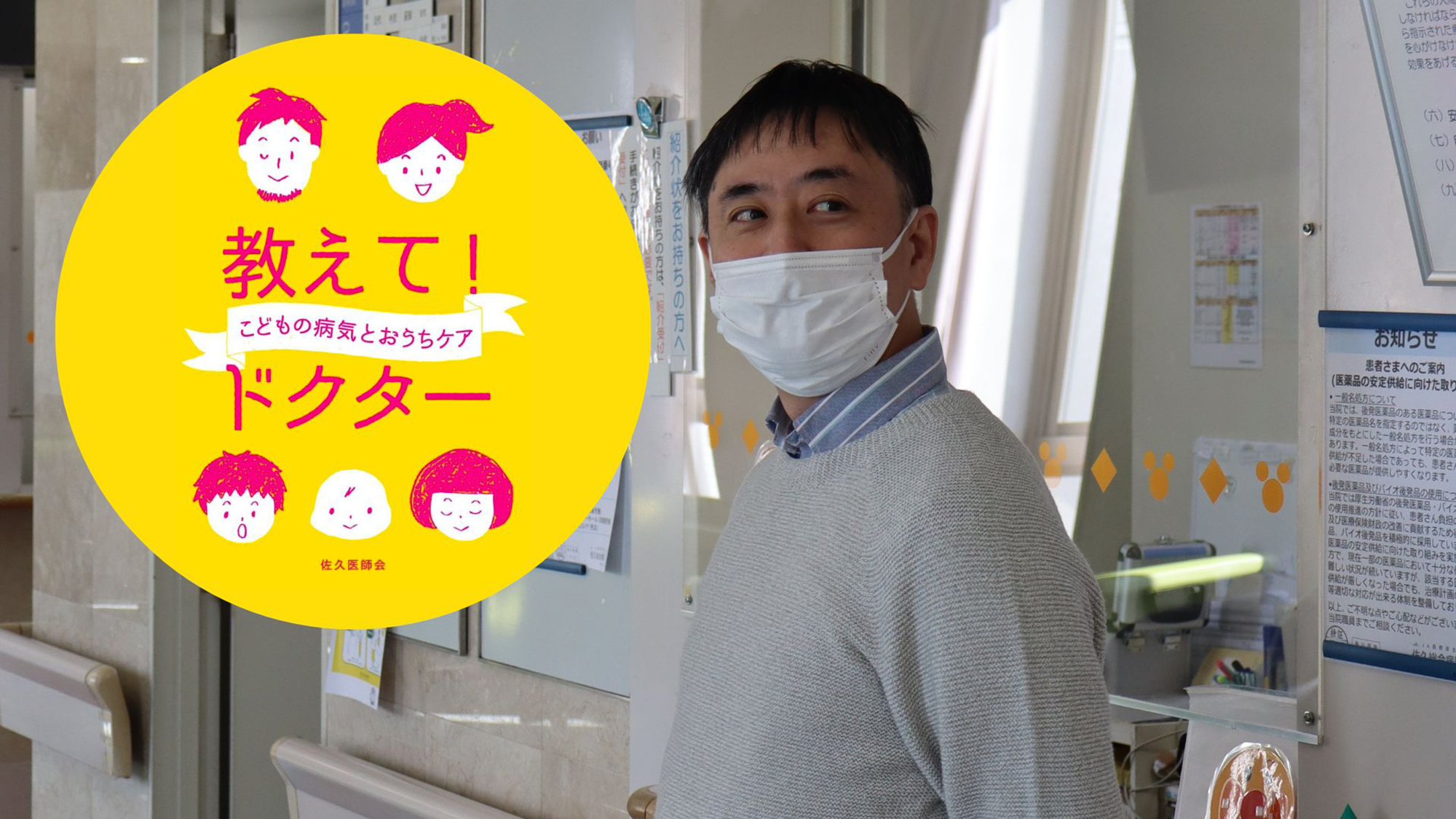
More than a decade after a winter night in Fukushima underscored the gap between parental worry and medical need, pediatrician Dr. Masahiko Sakamoto is using the Oshiete! Doctor app to give caregivers clear guidance before they head to the hospital.
Sakamoto recalled meeting parents who had driven 1.5 hours over snowy mountain roads near midnight in 2011 with an infant who had only a mild fever. The episode, at a rural hospital in Fukushima prefecture northeast of Tokyo, crystallized a pattern he has seen repeatedly: when caregivers lack basic information about childhood illnesses, anxiety can prompt unnecessary and sometimes risky trips for care. Doctors say similar dynamics surface around antibiotics, when some parents request drugs that will not help a child’s viral illness.
Clinicians try to explain common conditions and when antibiotics are appropriate, but time is limited and conversations can be difficult. Sakamoto decided the most effective moment to educate is before families arrive. “What I am currently most interested in as a pediatrician,” he said, “is how to provide accurate medical information to the parents or guardians of the children.”
Building a pocket-size doctor
To reach parents earlier, Sakamoto began public talks, then produced illustrated, plain-language manuals on childhood ailments. In 2016 the materials moved to smartphones with the free Oshiete! Doctor app, which he said has been downloaded more than 500,000 times in Japan and has about 100,000 active users.
“It’s quite famous around here,” said Risa*, a mother of two in Saku, where Sakamoto works at Saku Central Hospital. The city helps fund the app and promotes it through health centers and events for families. Another Saku mother, Rie Shinohara, called it “a resource that makes it easy to access information” on demand.
Updated annually, the app covers children and teens up to around age 15. It offers hygiene guidance, immunization schedules, and disaster-readiness tips, including how to safeguard children’s health during evacuations. The team has translated its disaster content to assist caregivers affected by the war in Ukraine.
Parents can also find advice on when to seek hospital care, explanations of common illnesses and injuries, what treatments might be prescribed, and how to manage mild symptoms at home.
As a parent, I’m really grateful to have something like that, a resource that makes it easy to access information, right at my fingertips.
Rie Shinohara, mother of two in Saku
Beyond the app, families in Japan can consult online resources from The Japan Pediatric Society or call #8000, a nationwide hotline that advises caregivers on whether to bring a child to a hospital. Japan’s Ministry of Health, Labour and Welfare has recognized Oshiete! Doctor as a helpful complement to #8000 and has honored the developers for the app’s design and impact.
Sakamoto’s group has examined outcomes among users, finding evidence that app users make more appropriate use of emergency departments than nonusers. In that study, 87% of users said it became easier to decide whether to visit the hospital and 94% said they would recommend the app.
Challenges of educating parents
The team has also probed attitudes toward fever, the worry that prompted the late-night winter drive. “The phenomenon known as ‘fever phobia’ among parents has long been recognized, and it is not unique to Japan,” Sakamoto said. Guidance in Oshiete! Doctor mirrors advice from the American Academy of Pediatrics, which notes that fever does not always require medical care and outlines when to call a doctor.
Most pediatric fevers stem from viral infections that resolve on their own, Sakamoto said, yet some caregivers fear seizures or brain damage and seek urgent care, especially first-time parents or those whose other children have had febrile seizures. Shinohara said she likely took her first child to the doctor more often than necessary, but felt more confident with her second. Sakamoto hopes the app can narrow that knowledge gap sooner.
In a survey-based study in Saku, researchers compared caregivers’ understanding of fever between 2017 and 2024 and noted which parents had downloaded the app. Over time, more parents recognized that fever alone does not mean a child needs medical care, and fewer believed antibiotics are always required. App users were most likely to answer correctly on antibiotic use, though nonusers also improved.
Sakamoto attributes part of that shift to incentives for pediatricians to avoid unnecessary antibiotics, which require doctors to explain appropriate use to caregivers. He said messages are often strongest when delivered by a child’s own clinician, and high-quality materials help reinforce those discussions.
Even so, the team found that anxiety about fever complications rose between the two survey years. The COVID-19 pandemic may have contributed. “Their knowledge about fever, how to manage fever, and also the appropriate use of antibiotics was enhanced, whereas the fear about the children’s fevers worsened,” Sakamoto said. “Even when knowledge improves, emotional anxiety does not easily disappear; this is one of the challenges of public education.”
Another challenge, Sakamoto said, is the growing use of AI chatbots. He has met parents whose worries escalated after a chatbot suggested a grimmer prognosis than warranted. “It is rather rare to see that the parents have holistically accurate information from AI,” he said.
If additional funding is secured, Sakamoto aims to make Oshiete! Doctor multilingual. His long-term priority is ensuring that vetted information truly reaches families and influences behavior. “We have the responsibility to check how the information is delivered to the parents or guardians and how it leads to behavioral changes,” he said. “So it is not just us disseminating information but whether or not it is truly received.”
Editor’s note: Risa (marked with an asterisk) asked that only her first name be used for privacy.
This article is for informational purposes only and is not meant to offer medical advice. For more on children’s health interventions, see Silver diamine fluoride shown to halt decay in kids.