
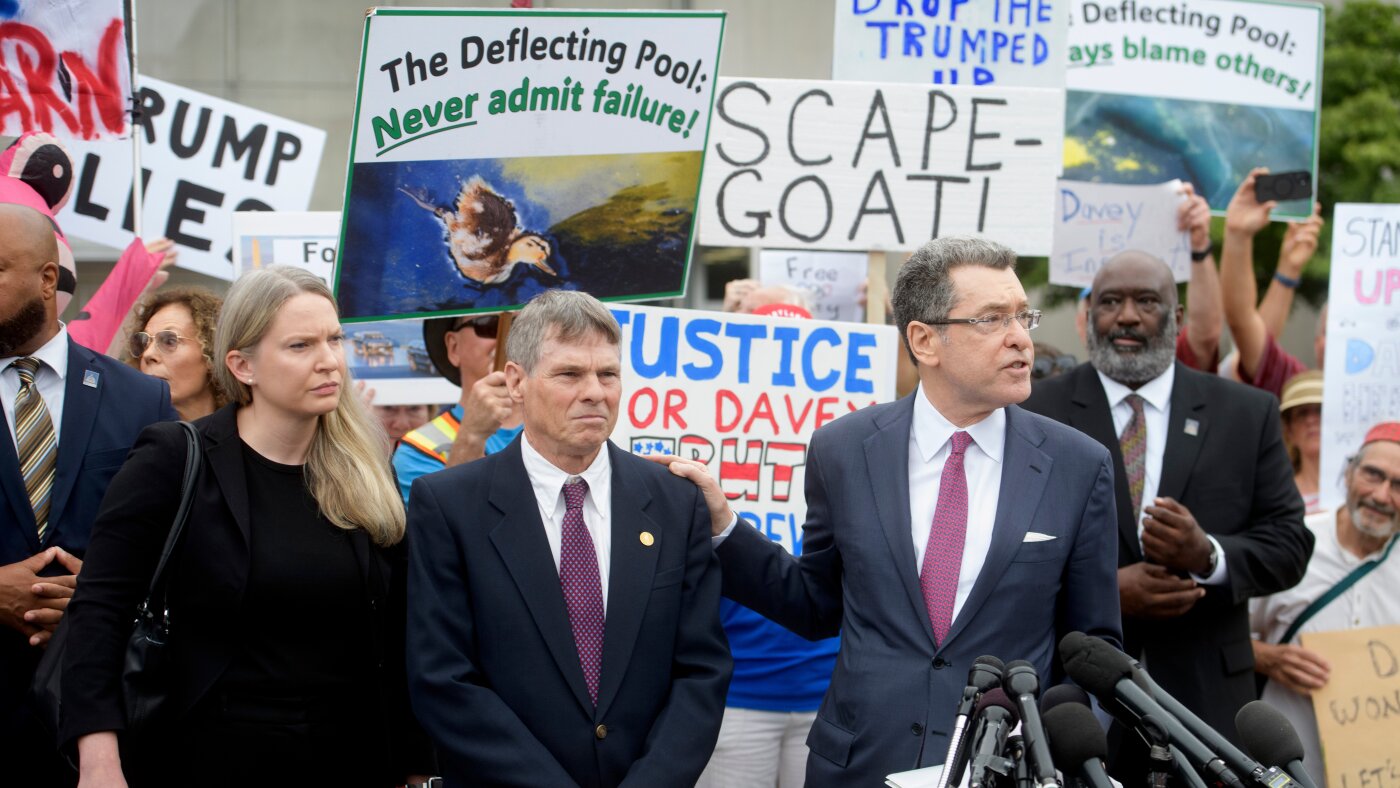
A judge agreed last week to dismiss the federal vandalism case accusing former U.S. Olympian David “Davey” Hearn and three others of damaging the Lincoln Memorial Reflecting Pool, but the Reflecting Pool case is not fully resolved. Superior Court Judge Todd Edelman still must determine whether prosecutors could revive it later.
Hearn’s attorney, Norm Eisen, said Monday that the defense wants the matter closed permanently. “We feel strongly this case should be dismissed for once and for all,” he said, adding that Hearn should not face the allegations again.
Prosecutors asked to drop the charge “without prejudice,” which would preserve the option to refile. Hearn’s legal team is seeking a dismissal “with prejudice” to prevent any future prosecution on the same felony count.
In a 28-page motion filed last week, Hearn’s lawyers argued the case was driven by politics and lacked sufficient evidence from the start. They said those pressures have not abated since the indictment was returned four weeks earlier.
In the days after prosecutors moved to dismiss, President Trump criticized Jeanine Pirro, the U.S. attorney for the District of Columbia, accusing her of backing down. He continued to assert that vandals damaged the pool’s lining, despite Pirro’s filing stating Interior Department records indicated peeling resulted from “botched installation.” Trump also cited a National Park Service employee who he said witnessed Hearn tugging at the coating, while acknowledging there was contractor error.
Speaking Monday, Hearn described the experience as surreal and said the scrutiny has affected his sleep and stress levels. The 67-year-old represented the United States in canoe slalom at the 1992, 1996 and 2000 Olympics, and said the case has challenged his views about the country.
He said support from his legal team, family and a wide community of friends has sustained him as the Reflecting Pool case drew national attention. Eisen said the matter resonated widely because of its implications for fairness, adding that if it could happen to Hearn, it could happen to others.
Reflecting Pool case and Hearn’s account
Hearn says he had a ‘scientific curiosity’ in the reflecting pool renovation
Hearn said his presence at the pool on Juneteenth reflected his long engagement in civic life. A lifelong Maryland resident, he stopped during a group bike ride on June 19 to inspect the recently repainted Reflecting Pool.
He said he had heard reports of algae turning the water green and of the new “American flag blue” lining peeling. The pool had been refilled, and Pirro’s July filing cited Interior records showing officials first flagged issues as early as June 11.
With years of experience in a waterproofing business, Hearn said the renovation drew his interest for practical reasons. “There’s a real sort of an engineering, scientific curiosity for me about what was going on,” he said.
Hearn maintains he dipped his hand into the water and removed a floating piece of paint, then was arrested and charged with destroying government property. He has denied the allegations, noting his long relationship with national parks.
He has volunteered with the National Park Service at the Chesapeake & Ohio Canal National Historical Park for two decades, and said he was raised to leave nothing but footprints.
A grand jury indicted Hearn on July 2 on one felony count of destruction of property worth $1,000 or more. He pleaded not guilty on July 9 as supporters gathered outside the courthouse.
He faced a late September trial date and up to 10 years in prison if convicted before prosecutors moved on July 31 to dismiss.
What’s next in the legal fight
The U.S. Attorney’s Office for the District of Columbia cited Interior Department records concluding the Reflecting Pool damage resulted from faulty installation rather than vandalism. “It is difficult to attribute the widespread damage to the Reflecting Pool to vandalism, let alone to establish that fact beyond a reasonable doubt,” Pirro wrote.
Weeks earlier, Pirro, a Trump appointee, had publicly asserted that evidence showed Hearn willfully damaged the pool. In the subsequent filing, she said the Department of the Interior had failed to provide exculpatory material in a timely way.
Eisen said the defense has repeatedly shown the condition of the Reflecting Pool was unchanged before and after Hearn’s contact, including through photographic submissions soon after his first appearance. He welcomed the dismissal but disputed the government’s explanation for the delay, saying it did not withstand scrutiny.
Hearn’s attorneys argue the court should dismiss the Reflecting Pool case with prejudice due to the risk of harassment and bad faith. If the judge declines, they want a review and potential disclosure of grand jury materials to examine how the indictment was obtained.
The defense says the grand jury record could illuminate whether a rushed or incomplete presentation led to the felony charge. Eisen said the team is evaluating all legal options.
A status hearing in September will address whether the dismissal will be with or without prejudice. Hearn said he is optimistic and trusts the courts and his legal team to bring the matter to a final resolution.
The case has echoed other high-profile criminal proceedings, including those where new details in felony charges have drawn national attention and debate over prosecutorial decisions.
Officials at the Department of the Interior have not publicly commented beyond court filings, and the U.S. Attorney’s Office for the District of Columbia has not indicated whether it will seek to refile the case if allowed.