
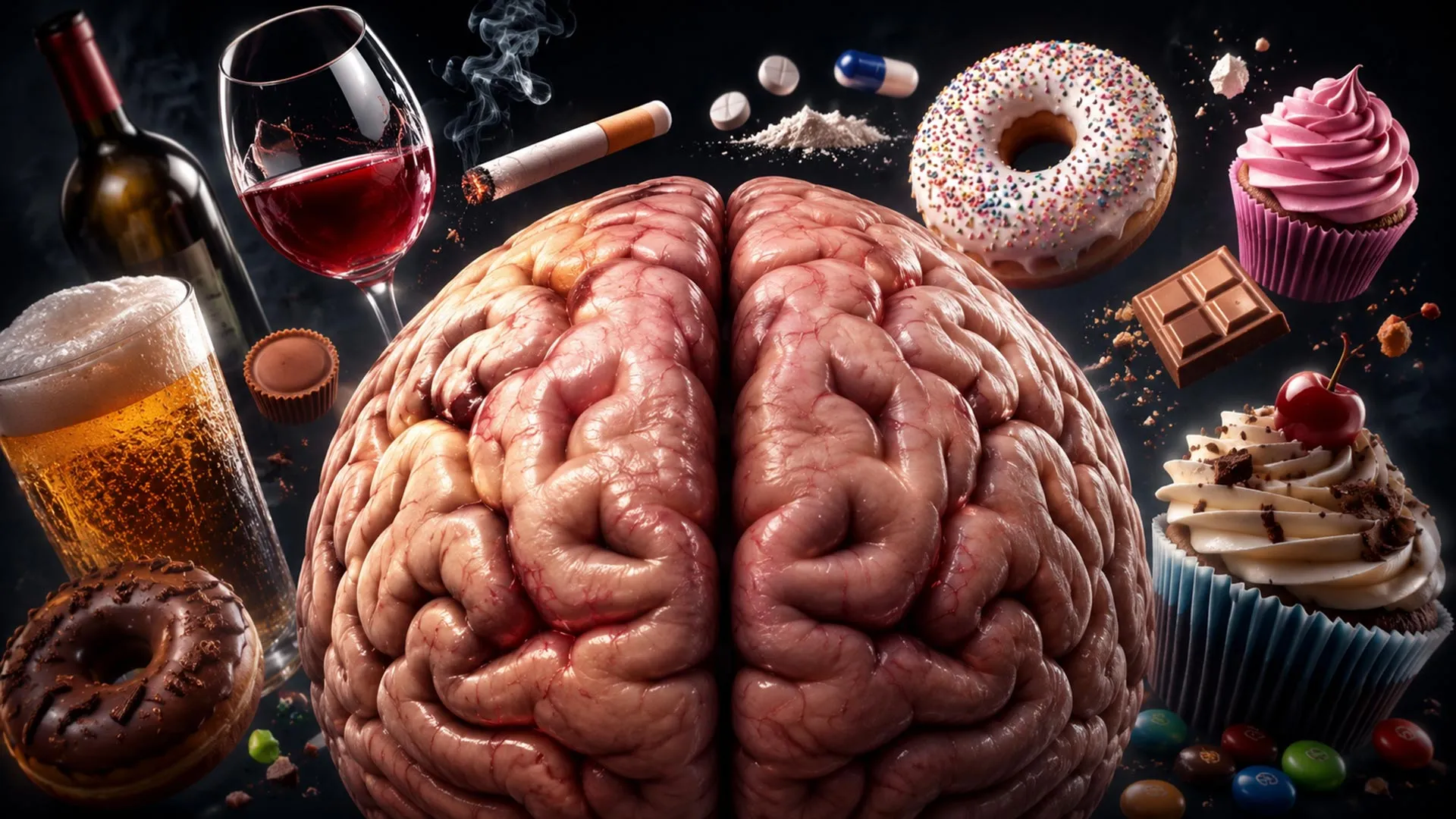
Ozempic and the brain are increasingly linked in research that suggests the blockbuster GLP-1 drugs may quiet the neural machinery that turns thoughts of rewards into action.
For many people, imagining a favorite food or drink can spark vivid mental images that guide behavior. This connection between thought and action helps motivate essential pursuits. In some cases, however, the process can go awry. Preoccupation with rewarding stimuli can fuel substance overuse, including overeating that leads to obesity and problematic alcohol intake.
Researchers have long tied vivid mental imagery to drug misuse, with studies from the 1970s noting the association. Understanding how craving translates into consumption is central to explaining addiction. That mechanism has remained elusive, but the arrival of a new class of weight-loss medicines offers a potential way in.
These medicines, including Ozempic and Wegovy, mimic the hormone GLP-1. They trigger insulin release, slow digestion, and increase satiety. First approved for type 2 diabetes because they help regulate blood sugar, these GLP-1 agonists were later found to cause substantial weight loss, in some cases approaching results seen with bariatric surgery.
Another, less publicized effect has emerged. Human studies indicate GLP-1 agonists reduce alcohol intake. Preclinical work in animals suggests they also curb use of cocaine, amphetamines, opiates, and nicotine. The findings are reframing how scientists think about the brain’s reward system and could expand treatment options for obesity, alcohol dependence, and other substance use.
Ozempic and the brain: reward pathways under review
The brain’s reward circuitry has been studied for decades, especially regions that produce the neurotransmitter dopamine. The ventral tegmental area and the nucleus accumbens are prime sites in that research and obvious places to look for GLP-1 activity. Yet these regions have relatively sparse GLP-1 receptors, making them unlikely to be the direct target for the drugs’ anti-consumption effects.
This has shifted attention to other structures. One step upstream from the dopamine centers lies the lateral septum, a region historically associated with emotional regulation. In the 1950s, experiments showed that damage to the lateral septum increased aggression while stimulation reduced it, a phenomenon dubbed “septal rage.” More recent mapping has placed the lateral septum at the center of a broad connectivity network, expanding views of its function.
While its interaction with the hypothalamus likely underpins those aggression effects, the lateral septum connects widely to regions with varied roles. A key source of its input is the hippocampus, known for enabling long-term episodic memory. The famous case of Henry Molaison, who could not form new memories after epilepsy surgery, illustrated the hippocampus’s central role. The hippocampus also contains place cells that fire in relation to location and, as newer work shows, time.
The lateral septum as a reward control hub
Information about “where and when” from the hippocampus is forwarded to the lateral septum. Crucially, recent studies show the lateral septum houses its own place cells that are strongly tuned to rewards, effectively adding “what is good here” to the spatial and temporal context provided by the hippocampus. The lateral septum shares this reward-laden information with dopamine-producing regions typically linked to pleasure and reinforcement.
Many neuroscientists now view the lateral septum as a key interface that allows us to think about potential rewards and relays those evaluations to dopamine systems that generate motivational drive. There is a further reason to focus on this area. The lateral septum is densely packed with GLP-1 receptors.
Emerging evidence supports this mechanism. Activating GLP-1 signaling directly in the lateral septum reduces food intake in mice, and research published earlier this year found a similar effect on alcohol consumption. Separate work indicates GLP-1 drugs dampen forms of activity in the lateral septum that may limit its communication with other brain regions.
Taken together, these findings suggest GLP-1 agonists may mute the neural representation of reward value at a critical junction, which could explain their effects on appetite and substance use. If confirmed, this would place the lateral septum at the center of craving and offer new avenues for treating disorders tied to reward processing, echoing how other recent work has linked biological changes to behavior, such as frequent cannabis use linked to higher waking cortisol.