
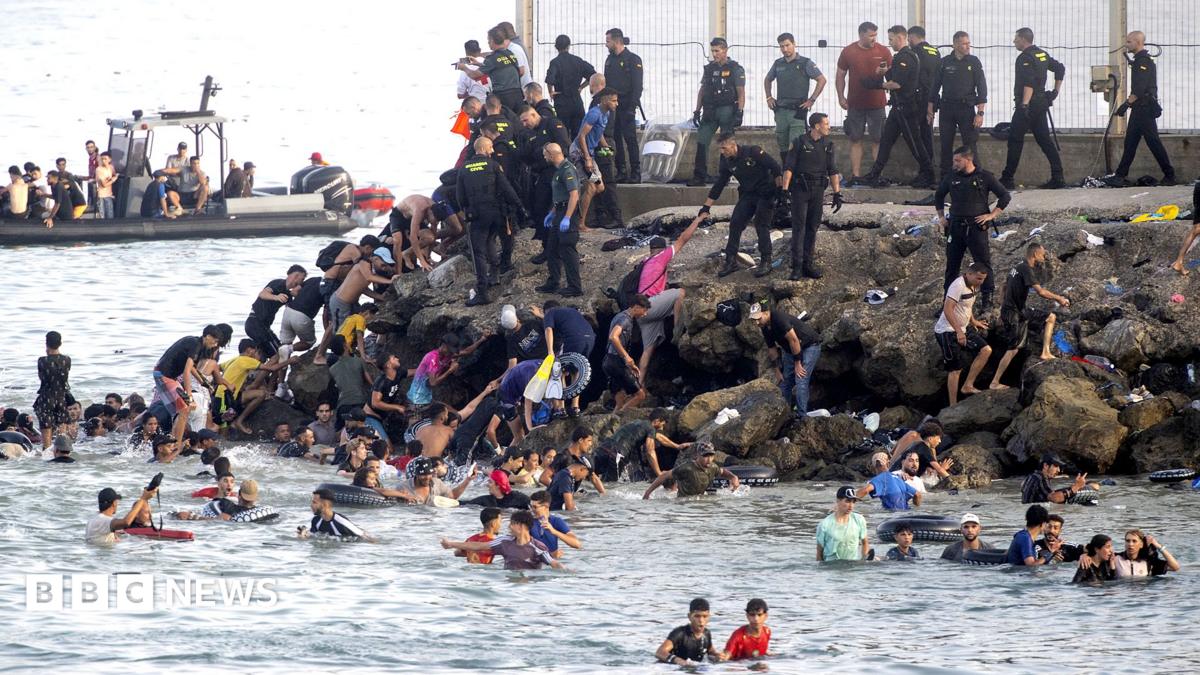
The Ceuta migrants surge saw about 60,000 people cross from Morocco into the Spanish North African enclave, Spain’s prime minister said, blaming trafficking networks for the mass movement. Local media reported at least 57 deaths during the rush to the border.
Pedro Sánchez called the events a violation of Spain’s territorial integrity. In response, Italy suspended Schengen border-free arrangements with Spain, according to government statements.
The influx followed a ruling by Spain’s Supreme Court that migrants intercepted at sea while attempting to reach Ceuta or Melilla, another Spanish enclave, cannot be summarily returned to Morocco.
By Friday evening, more than 48,000 people had voluntarily returned to Morocco, Spanish officials said.
One migrant who decided to go back warned others not to attempt the journey, saying people were dying and urging would-be travelers to stay away.
Ceuta, located on the North African coast across the Strait of Gibraltar from mainland Spain, has long been a key route for people seeking to reach Europe. Summer months often bring coordinated attempts to reach the enclave, frequently organized via social media.
Coveted by Morocco, Ceuta and Melilla have long been flashpoints in Spanish-Moroccan relations. They are the European Union’s only land borders with Africa.
Local authorities had recently sought additional support from Madrid amid a rise in attempted crossings. On Thursday, chaotic scenes unfolded as border controls appeared to collapse.
A visitor to the city described the day as very overwhelming, saying they saw thousands of people coming out of the sea in swimwear, many simply seeking a better future, but beyond the city’s capacity to assist.
Another resident said they had never seen anything like it, describing public squares and streets crowded with people looking for food. A few shops remained open before police advised closures due to the overwhelming numbers.
Some residents said they stayed indoors out of fear. Reflecting on a previous influx in 2021, one witness said the security forces had acted then, but this time their presence did not translate into decisive action, which felt unsettling.
Ceuta migrants surge strains border response
Authorities in Spain and Morocco continued to manage returns and relief efforts as the situation evolved. Officials in Madrid emphasized that the priority was restoring order while addressing humanitarian needs and investigating the role of trafficking gangs in the episode.
Spain’s prime minister spoke after consultations with European Union partners in Brussels, where concerns over border security and migration management have often been at the forefront of discussions about the Schengen area and its rules.
The government’s handling of the influx drew comparisons with other recent crises in the region, including situations where more than 300,000 flee wildfires in France and Spain, testing emergency response systems and coordination between national and local authorities.
Spain’s Ministry of the Interior, which oversees the Guardia Civil and national police, coordinated closely with border guards and humanitarian agencies, while officials in Ceuta called for long-term solutions to recurring migration surges.
As the numbers of people on the streets declined and many migrants returned to Morocco, attention shifted to legal and diplomatic questions, including Spain’s obligations under international refugee conventions and the future of cooperation with Rabat.