
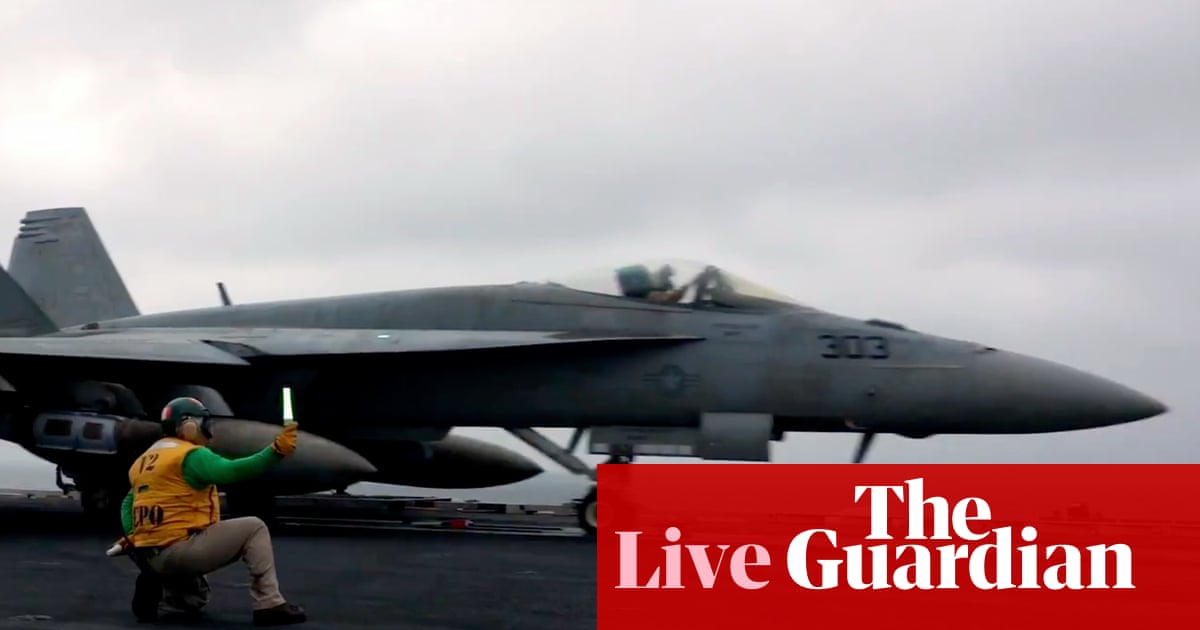
Houthis attack Saudi tankers in the Red Sea after declaring a blockade of the kingdom, while the United States carried out a 12th consecutive night of strikes on Iranian military targets, according to officials and state media reports. One Saudi-owned vessel caught fire and all crew were reported safe, Saudi authorities said.
Houthis attack Saudi tankers confirmed
Yemen’s Iran-aligned Houthi movement said it launched missile and drone strikes on two Saudi oil tankers, naming the Encelia and the Layla. Saudi state news agency SPA later said the Encelia was hit and a fire broke out at the bow. The incident followed the Houthis’ announcement of a maritime blockade on Saudi Arabia, a step current and former US officials have warned could widen the conflict and strain US forces.
Maritime security reporting indicated the Encelia issued a distress call near Jizan late Wednesday. The Houthis also claimed they had forced about 10 ships to turn back, and vessel-tracking data showed several tankers altering course in the Red Sea after the warning to avoid Saudi ports.
US strikes continue for a 12th night
US Central Command said American forces struck Iranian military assets, including maritime capabilities, missile and drone storage facilities, coastal surveillance sites and air defense systems. The command said the actions were intended to further reduce Iran’s capacity to target commercial shipping and civilian mariners. Centcom added that dozens of Iranian sites on land had been targeted this month and that US forces had redirected commercial vessels and disabled one to prevent port movements amid a resumed naval blockade.
Iranian media reported two US attacks on a military target in Bushehr on Thursday, near the country’s sole operating commercial nuclear power reactor, marking three strikes there in two days. State television said two people were killed and 11 wounded in what a Khuzestan provincial official described as a US missile strike on the Shalamcheh crossing on the Iraqi border.
Iran warns of retaliation
Before the latest barrage, Foreign Minister Abbas Araghchi posted that Iran’s defense doctrine is “eye for an eye,” warning that any aggression against the country, including its infrastructure, would bring a powerful and decisive response. He said those contributing to such actions would be considered legitimate targets.
Hormuz control claims disputed
The Islamic Revolutionary Guard Corps said it stopped three oil tankers from transiting the Strait of Hormuz, claiming the ships, “provoked” by the US military, tried to pass through a mine-laden route south of the strait. After one tanker exploded and caught fire, the IRGC said the other two turned back. The statement did not specify when the incident occurred. US Central Command responded that Iran does not control the strait and that the waterway remains open for transit with commercial vessels continuing to pass with US military support.
Houthis attack Saudi tankers heightens Red Sea risk
The Houthis’ Red Sea threat, centered near the Bab el-Mandeb strait, raises the prospect of a second chokepoint on oil flows as Iran presses its leverage around Hormuz. Even before the latest Red Sea incidents, Iran’s efforts in the Gulf had propelled oil and fuel prices higher, feeding inflation worldwide. On Wednesday, several ships diverted in the Red Sea, with some signaling the Suez Canal as a new destination. Millions of barrels a day of Saudi oil have been moving to Yanbu on the Red Sea to bypass Hormuz, but any sustained disruption at Bab el-Mandeb could force longer and costlier routes.
Market jitters and tanker movements
Oil prices edged up as investors weighed the risk of renewed supply shocks. Brent crude rose more than 1.3 percent to $95.31 a barrel on Thursday after the US strikes and the Houthi claims. Analysts noted that lower inventories increase the risk of shortages if the conflict persists.
Shipping data showed two Chinese very large crude carriers, carrying a combined 4 million barrels of Saudi oil, heading toward the Bab el-Mandeb to exit the Red Sea. The Singapore-flagged Xin Long Yang, which paused earlier in the week, resumed its southbound journey and was sailing past Yemen toward Qinzhou. The Chinese-flagged Cosnew Lake followed, signaling Huizhou as its destination. AIS data indicated Chinese crews aboard both vessels.
Regional reactions and US-Saudi nuclear deal
Foreign ministers from Southeast Asia plan to call for freedom of navigation in international straits in a draft communique at an Asean meeting in Manila, according to a document seen by reporters. The text includes language on unimpeded passage through Hormuz and urges self-restraint as energy shocks ripple across the region.
Separately, the United States and Saudi Arabia signed a nuclear cooperation agreement that could permit future domestic uranium enrichment. The Department of Energy said the two sides signed a peaceful nuclear cooperation pact and a bilateral safeguards agreement. While many details remain unclear, critics in the region and in Washington warned the move could raise proliferation risks and face scrutiny in Congress.
Further claims of regional attacks
Iranian outlets reported that the IRGC and army claimed strikes on US forces at Kuwait’s Al-Adiri camp, Ali Al Salem airbase, and other facilities including Arifjan and Doha camps. Kuwait’s military said its air defenses were responding to hostile drones amid what it called Iranian aggression, adding that explosions heard were interceptions.
Escalating rhetoric
Earlier, Donald Trump warned on social media that any Iranian fire at ships in Hormuz would prompt the United States to bomb and destroy a bridge or power plant, including near or in Tehran. The tensions around Hormuz and the planned Asean meeting in Manila come as US-Iran fighting overshadows ASEAN meeting in Manila, underscoring regional fears of wider conflict.