
Every year, billions of migratory bird species stitch together continents, oceans and ecosystems as they travel between feeding areas and breeding grounds.
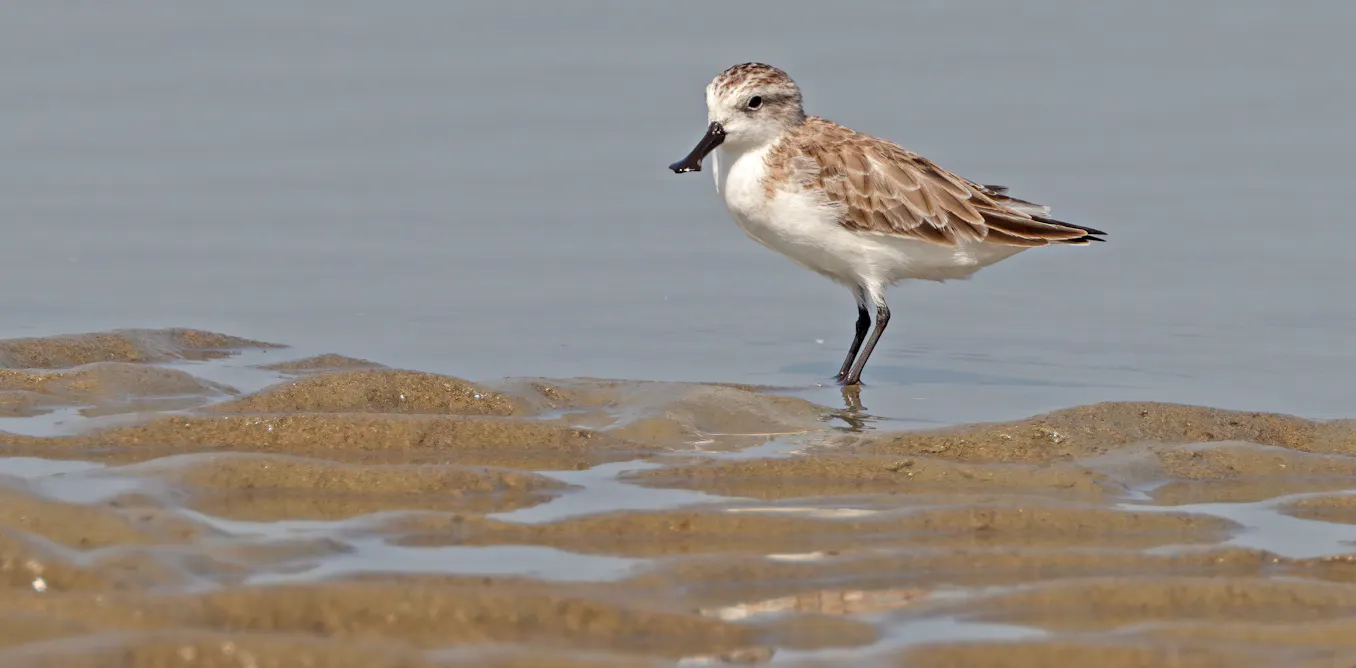
A bobolink (Dolichonyx oryzivorus) departs North American grasslands for South America’s Pampas. A Newell’s shearwater (Puffinus newelli) ranges over the North Pacific, then returns to the Hawaiian Islands to nest. A spoon-billed sandpiper (Calidris pygmaea) moves from Arctic Russia to the shrinking tidal flats of Southeast Asia for the nonbreeding season.
These birds use distinct habitats, routes and face different pressures. What unites them is dependence on linked habitats that span thousands of miles and many national borders.
Today, all three, along with many other species, are under strain. Their journeys remain spectacular, but the birds are increasingly imperiled as critical habitats and ecological connections are degraded or lost and as threats to survival and reproduction grow.
Researchers who study migratory birds report that, in a comprehensive analysis covering more than 3,380 species worldwide, more than half are in decline. The assessment attributes the downturn to cumulative hazards including habitat conversion, invasive species, collisions with buildings, hunting, the pet trade, toxic pesticides and, for some seabirds, entanglement in commercial fishing gear.
The study also points to a more hopeful trajectory. Advances in science over the past two decades show that conservation can stabilize and recover these species, provided governments act before listings under endangered species laws become necessary.
Protecting migratory bird species across their epic journeys
Refocusing conservation on the full annual cycle can safeguard birds and their habitats year-round, from breeding areas to nonbreeding sites and along the routes that connect them.
This strategy blends protection and restoration of key places with efforts to reduce threats wherever they occur. It depends on international collaboration and proactive government leadership to prevent species from sliding toward endangerment.
Migratory birds are more than extraordinary travelers. They pollinate, disperse seeds, suppress agricultural pests, shuttle nutrients between ecosystems and bolster local economies through birding and ecotourism.
Their declines signal not only biodiversity loss but also weakening ecosystem functions that support wildlife and people.
There is encouraging progress. New tools and data are transforming understanding of where, when and why populations falter.
Miniaturized trackers, genetic methods, automated radio telemetry, long-term monitoring and citizen-science platforms like eBird now reveal movements, timing and habitat use in unprecedented detail.
For the first time, scientists can follow individual birds across continents and identify where targeted actions will yield the greatest benefit.
A new strategy
For much of the last century, conservation for migrants centered on safeguarding important places such as breeding sites, wetlands, nonbreeding habitats and stopovers.
That approach has saved species from extinction and remains essential. Protected areas will continue to anchor biodiversity strategies.
Yet evidence shows place-based protection alone is often insufficient for species whose lives span continents and oceans. Understanding when and where populations are most constrained, then addressing those pressures across the entire annual cycle, is equally critical.
The opening trio of species illustrates this point.
Bobolinks nest in North American grasslands but spend much of the year in South America. Securing nesting habitat cannot reverse declines if grasslands continue to vanish or pesticides poison birds elsewhere.
Newell’s shearwaters spend most of their lives over the Pacific but return to Hawaii to breed, where artificial lighting, power line strikes and introduced predators, including domestic cats, endanger vulnerable colonies.
Critically endangered spoon-billed sandpipers depend on a diminishing chain of tidal mudflats that link breeding grounds on Russia’s Chukotka Peninsula with nonbreeding areas in Southeast Asia.
Losing even a few of these staging sites could imperil one of the rarest migratory birds.
Each species needs a tailored plan, but all require the same mindset: conserve the full annual cycle rather than a single place, season or threat.
This framework is gaining traction in the United States and shows what is possible.
What success can look like
Road to Recovery is an international initiative aiming to halt declines of North America’s fastest-falling bird species before they require protection under U.S. endangered species law.
Instead of waiting for collapses, Road to Recovery convenes scientists, agencies, conservation groups, landowners and communities into species-focused working groups. These teams diagnose pressures on populations and direct limited funding to the most effective actions.
More than 50 working groups are now crafting strategies for species ranging from bobolinks and lesser yellowlegs (Tringa flavipes) to evening grosbeaks (Coccothraustes vespertinus) and yellow-billed cuckoos (Coccyzus americanus). Their efforts have spurred new research, habitat protection, policy shifts, hunting reforms and international partnerships.
International frameworks, including the Convention on the Conservation of Migratory Species of Wild Animals, as well as regional flyway partnerships and treaties, enable countries to coordinate conservation across borders.
However, the convention’s impact is limited when major nations have not joined. The United States, Canada, Mexico, Russia and Japan are among those that have not signed.
Wider participation and sustained government investment can translate scientific insights into coordinated action across the full annual cycle.
Governments cannot succeed alone. Landowners, businesses, conservation organizations and individuals all play roles by restoring and protecting habitat, reducing threats such as free-roaming cats and building collisions, supporting bird-friendly policies and contributing to citizen-science that tracks populations.
Applying these lessons to migratory bird species
There is ample reason for optimism.
When threats are identified and addressed, bird populations rebound. The pesticide DDT nearly erased species such as the bald eagle, peregrine falcon and osprey.
After its ban, these raptors recovered.
The task now is to apply what the science has revealed.
Next spring, bobolinks will return to North America’s grasslands. Newell’s shearwaters will cross vast Pacific distances back to Hawaii.
Spoon-billed sandpipers will attempt one of the most remarkable migrations on Earth.
Whether future generations witness these journeys will depend on choices made today and the steps taken to conserve migratory bird species across their entire annual cycles.
Scientists are also expanding knowledge of marine food webs, from seabirds to apex predators such as orcas, with new behavioral work like efforts that document how orcas ram sunfish to fragment prey, helping build a fuller picture of changing ocean ecosystems.