
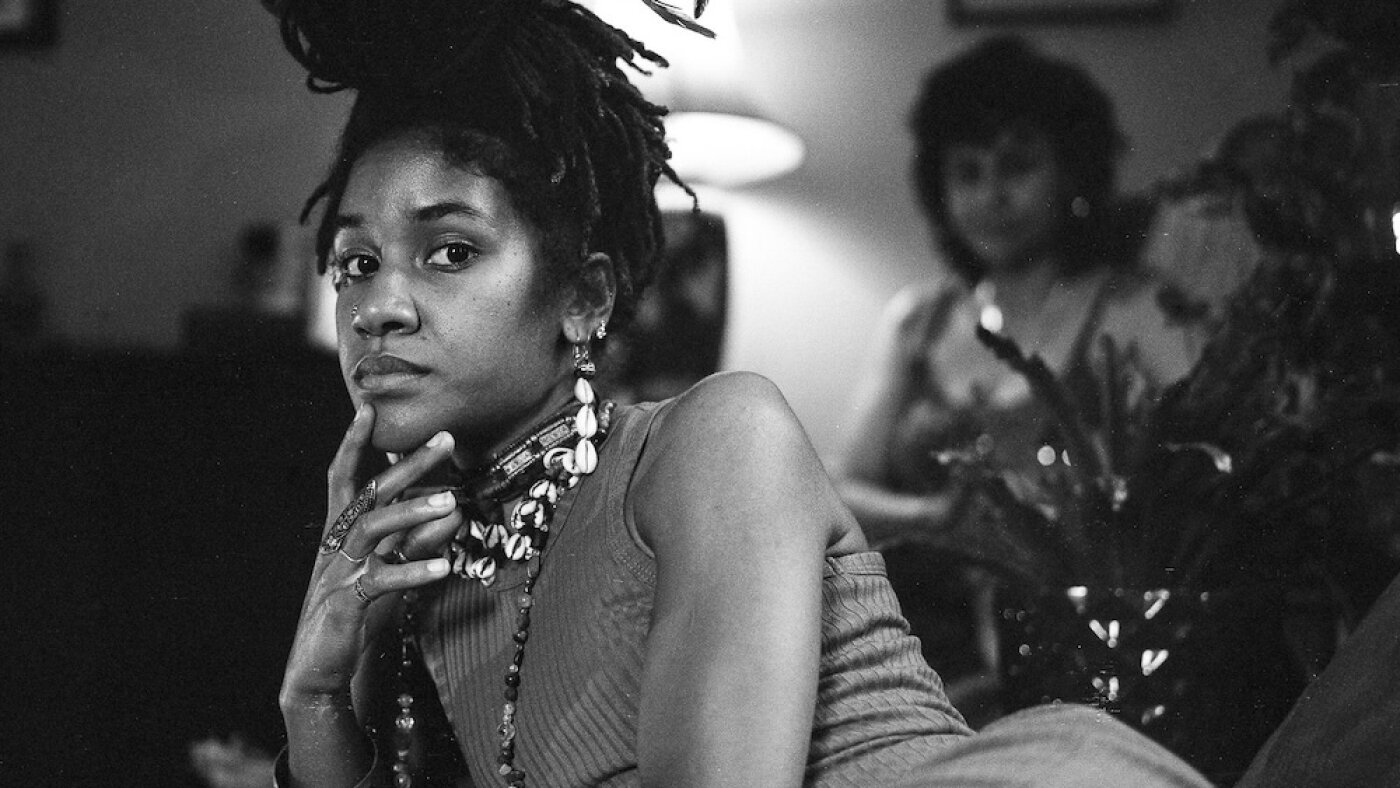
For five years, photojournalist Laila AnnMarie Stevens chronicled her family’s reverse migration from New York City to North Carolina, seeking better opportunities and what she called a different quality of life. She framed the move as a countercurrent to the early 20th century Great Migration, when many Black families left the South for the North to escape racial oppression and pursue stability.
In an interview, Stevens discussed images that span the Southern landscape and multiple generations, including both relatives and the friends she considers chosen family, from siblings, aunties and cousins to grandparents, great-grandparents and even living great-great grandparents.
This interview has been edited for length and clarity.
Reverse migration and contemporary kinship
What sparked the idea for this project?
Stevens said the series began while she was a sophomore at the Fashion Institute of Technology, where she was tasked with developing a long-term body of work with personal meaning.
She returned to the realities of her life as a Black queer woman, considering the social conditions around those identities and the networks of support that coexist with them.
Around the same time, as her sisters relocated to other states, she became interested in metaphor in contemporary photography. Their departures and transitions echoed questions she was already probing, including migration, separation, intimacy, protection and how Black women hold a sense of home within themselves as places change.
You’ve said your family’s move from Queens to Clayton, N.C., reflects the newer wave of reverse migration. How so, and why North Carolina?
According to Stevens, raising a family in Queens increasingly meant losing access to essentials like space, a yard, larger rooms and a feeling of stability. What began as a practical decision came to sit within a wider social shift she was observing.
Mentors at the arts nonprofit The Black School, Joseph Cuillier and Shani Peters, encouraged her to read columnist Charles M. Blow’s book The Devil You Know: A Black Power Manifesto, which advocates that Black Americans consider a strategic return South to build political power in ancestral homelands. Though she is no longer affiliated with the organization, Stevens said that period helped shape her thinking on Black spatial politics, belonging and collective return.
The text, she said, gave words to what she saw firsthand, a contemporary wave of reverse migration among Black families seeking affordability, space and community in the South. She later learned her grandfather had lived in North Carolina for years, a discovery that layered the move with lineage, even if it was not a factor in the decision. The relocation felt both circumstantial and historical, as if tracing an unspoken family path.
What did you learn about your family while making the series, and about yourself?
Stevens described a moment that arrives just before a portrait is made. After direction, her subjects become still, then choose a pose of their own. In that instant, she said, they seem to turn into little girls again. Watching women, often the caretakers and documenters, allow themselves to be seen felt especially vulnerable.
The ritual of photographing also stood out. In many households, a mother tells a daughter to pose, capturing everyday life. Stevens asked how often daughters stop to ask, Mom, can I take a picture of you? That inversion mattered to her. The portraits offered space to view the women in her life with care and reciprocity.
What challenged you most in the project, and what proved most rewarding?
The greatest challenge, she said, was visually linking images made within her family to portraits of close friends with the same sense of sisterhood. She wanted to look at chosen sisters through the same emotional and visual lens, acknowledging how they shape her life through the practice of sistering.
A highlight was introducing her dear friend, artist Ibtisam Tasnim Zaman, to her grandmother through the project. Zaman, the daughter of lesbian mothers and a central sitter in the series, painted Stevens’ grandmother after Stevens showed her work at home. Her grandmother admired the photographs and asked for a portrait. The painting now sits in her craft studio, a meeting point of kinship networks that are often kept apart.
Much of your work uses color. Why is so much of this series in black and white?
Black and white helped Stevens think about continuity and lineage. Her grandmother often tells her that few things Stevens has faced are things she has not endured, a sentiment that stayed with her.
She wanted the images to sit slightly outside of time, so a viewer decades from now might not easily place whether they were made in 2002 or 2022. The stories, she said, are repetitions and continuations, and black and white allows that continuum to be seen.
What is the story behind your favorite image?
Stevens chose a photograph of her 5-year-old niece with her great-grandmother in a Cambria Heights backyard. Few of her peers, she said, have witnessed five living generations at once. Seeing Black women across generations together in everyday tenderness and joy felt profound.
Visually, the backyard seems to hold them. Thick grass surrounds them, forming a natural frame that embraces their bodies, which she says ties back to themes of lineage and care. She also appreciates the understated humor of the family dog in the frame, a bridge between ages, playful to the young and comforting to elders.
What do you hope viewers take away from the work?
Stevens hopes the photographs invite curiosity about how people relate to one another. She wants the series to encourage reflection on intimacy, care and connection, and how identity shapes who we feel close to or distant from.
She hopes viewers ask themselves how intersections of race, gender, sexuality, class or lived experience inform the relationships they build, and why they may open up to some people more than others. Recognizing those patterns, she asks, do we want them to change?
To Stevens, the work is both personal archive and sociological observation. It studies the emotional architecture of closeness, how people make family beyond blood, how care moves between generations and how identity informs the act of seeing and being seen. Ultimately, she said, she wants the images to prompt more intentional thinking about connection, vulnerability and the communities people choose to build.
Laila AnnMarie Stevens is a photojournalist focused on contemporary kinship and community care, and her practice explores evolving family structures through community bonds, particularly among queer youth and the sisterhood of marginalized women and girls in Brooklyn, N.Y. More of her photography is available at LailaAnnMarie.com and on Instagram at @lailaannmarie. For more on artists documenting intergenerational legacy, read Betye Saar obituary and Simone Forti remembered.