
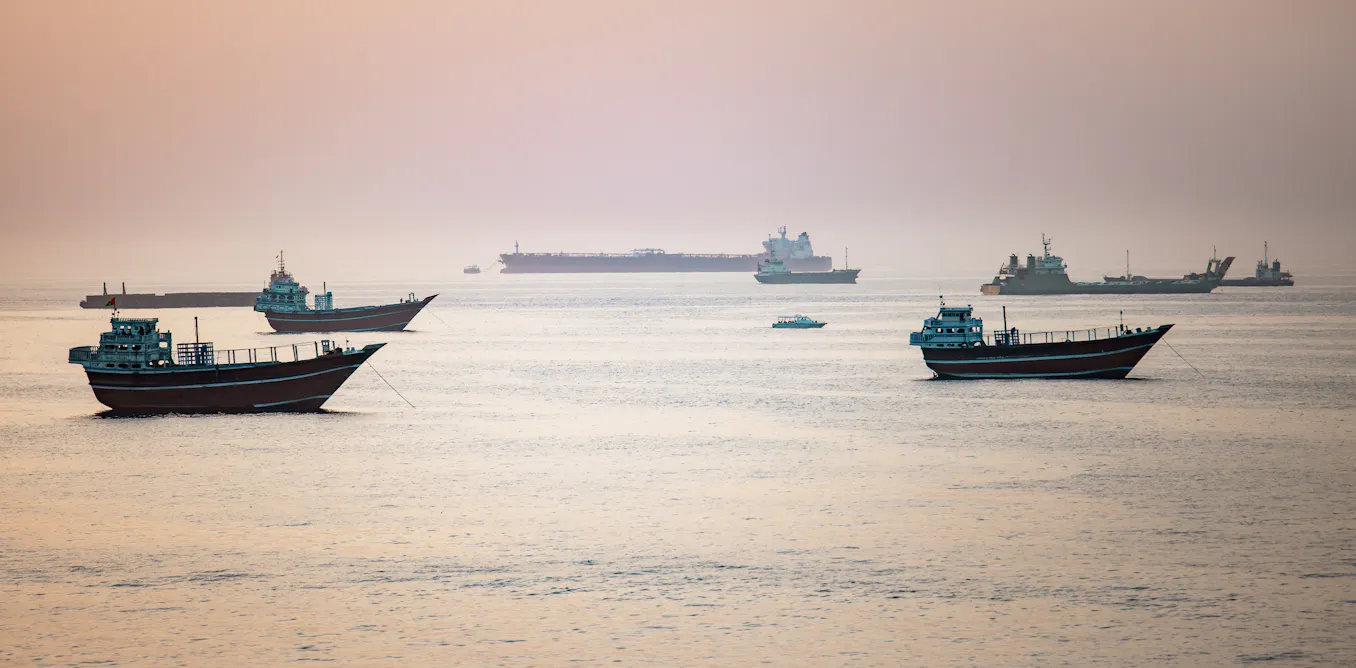
The Strait of Hormuz biosecurity risk has received far less attention than the economic fallout from the waterway’s closure. New research warns that more than 1,500 commercial vessels laid up in the Persian/Arabian Gulf since February have accumulated marine biofouling on their hulls, creating a significant environmental threat as traffic resumes.
When these ships get under way, they may carry organisms to new ports, potentially triggering an international biosecurity super-spreader event. Such transfers of non-native marine plants, animals, parasites and diseases can disrupt local ecosystems, harm wild fisheries and aquaculture, and impose heavy costs on coastal industries.
If ships lie idle, their hulls can accumulate large amounts of biofouling in a short time, especially in tropical waters. This raises concerns for marine biosecurity agencies around the world.
Shipping disruptions and Strait of Hormuz biosecurity
Global merchant shipping underpins commodity trade and passes through 24 identified maritime choke points. Researchers note that 20 have alternate routes that allow re-routing, which is slower and costlier but avoids mass layups.
Only four have no viable alternatives, including the Strait of Hormuz, the Oresund Strait, the Bosporus and Dardanelles, and the Bohai Strait. Disruptions arise from conflicts and wars, terrorism and piracy, maritime accidents, and environmental pressures such as drought.
Layups can also be intentional. At any time, about 1% of the world’s commercial fleet is taken out of service due to oversupply, seasonal factors, or maintenance. During economic shocks, layups scale dramatically.
Following the 2008 financial crisis, thousands of vessels, including about 10% of container ships and 25% of refrigerated vessels, were idle. The 1970s oil crisis saw 466 tankers laid up.
Large fishing fleets also stand down seasonally due to regulatory closures and weather, such as the South China Sea closure between May and August and restricted seasons in the North Pacific and Bering Sea.
Threats to New Zealand and Australia
Stationary ships accumulate biofouling quickly, especially in tropical waters. Once they sail, these organisms can be transported to new regions, potentially delivering invasive species, parasites or diseases.
The Persian/Arabian Gulf hosts more than 50 non-native marine species, and many native species from the region have previously spread internationally. While New Zealand and Australia are unlikely to see a large influx of vessels from the Strait of Hormuz immediately after reopening, research indicates that many ships carrying potential invaders could arrive within a year.
Both countries have robust biosecurity systems, including early detection and rapid response. Officials previously screened cruise ships laid up during the COVID pandemic, requiring vessels to depart or undertake maintenance to ensure hulls and niche areas such as propellers and rudders met acceptable cleanliness standards.
Managing biofouling on commercial vessels making short port calls remains difficult. Experts recommend the following measures for ships departing the region:
- Inspect vessels to estimate biofouling levels before departure, using regional services and environmental DNA sampling near hulls to gauge threat levels.
- Where possible, conduct in-water cleaning before leaving the Persian/Arabian Gulf, with capture of biofouling and coating debris to prevent additional environmental exposure. Early, safe cleaning reduces invasion risks.
- Forecast routes, identify the first post-Gulf port, and communicate with port and national authorities to assess biosecurity risks.
- Ports and national agencies should deploy early detection and rapid response, including environmental DNA and low-cost rapid assessments, to identify new incursions in time to act.
- Establish rapid alert and information-sharing networks to disseminate biosecurity events.
Mitigating a potential super-spreader event linked to Strait of Hormuz biosecurity issues, and similar disruptions elsewhere, will require coordinated global action to safeguard environments, economies and communities from marine biological invasions.
As governments move to protect marine ecosystems through measures such as the 30×30 ocean target, responses to biofouling risks will be an important test of enforcement and international cooperation.
Regional coordination between Gulf states, including engagement with bodies such as the Regional Organization for the Protection of the Marine Environment, could play a crucial role in implementing these measures.