
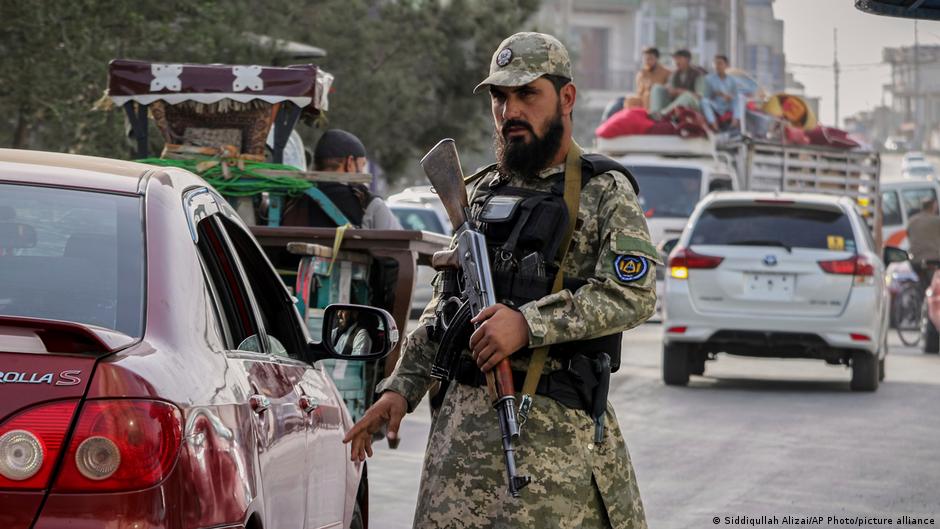
Taliban facing insurgent pressure less than a month before the five-year mark of their return to power in Afghanistan, after the Islamist authorities temporarily lost control of the Yaftal-e Payeen district center in Badakhshan. The setback was brief, but it was the first time since August 2021 that the Taliban ceded a district capital.
Accounts from Badakhshan also pointed to infighting among Taliban units and a deadly strike on senior Taliban figures.
On August 2, roughly two weeks after the district center incident, former Afghan army general Sami Sadat announced that his forces were launching coordinated attacks against the Taliban across the country.
“Today at 5:00 AM, I ordered all military members of the United Front to begin military operations,” General Sadat said in a video message recorded in the United States, where he has lived since the Taliban takeover.
Other armed factions, including the National Resistance Front led by the son of the late commander Ahmad Shah Massoud, have waged a sustained campaign against the Taliban since 2021. While these groups have not seriously threatened the Taliban’s overall hold on power, analysts are asking whether the Badakhshan clashes could open the door to more consequential resistance.
“In these five years, this opposition existed in two forms: political and military… As the five-year mark approaches, both forms of opposition have taken shape,” former Afghan Interior Minister Mohammad Umer Daudzai said.
Fear of new proxy wars in Afghanistan
The Taliban have ruled with strict controls since the collapse of the former US-backed government five years ago. The authorities have curtailed basic rights and barred most women from work and schooling beyond grade six.
Many former officials remain in exile. Taliban leaders say all Afghans can return to live normal lives, while critics argue that meaningful return requires the space for political activity.
Although the administration has opened limited channels abroad, most governments still do not recognize it. To date, only Russia has acknowledged the Taliban as Afghanistan’s official government.
Amid internal and external pressures, Taliban leaders have repeatedly cited improved security as their central claim to legitimacy. Specialists caution that the movement’s governance approach could, instead, create openings for armed challengers in different regions.
“If this policy of the Taliban continues, armed forces will emerge against them, opposition will emerge, interference from neighbors will arise, and ultimately the ground will be prepared for proxy wars,” former acting defense minister Shahmohammad Miakhel said.
Beyond domestic opposition, the regional branch of the Islamic State remains active. The group has claimed several high-profile attacks on Taliban officials, including a January blast at a Chinese restaurant in central Kabul that killed at least seven people, and a December 2024 suicide bombing in Kabul that killed the regime’s minister of refugees, Khalil Ur-Rahman Haqqani.
Taliban claim Pakistan supports insurgents in Afghanistan
The most serious challenge to Taliban control could come from beyond Afghanistan’s borders. Relations with Pakistan, once seen as a close ally, have deteriorated since 2021 and erupted into open clashes this year.
A United Nations report in May said cross-border hostilities in the first quarter of 2026 caused at least 372 Afghan civilian deaths and nearly 400 injuries.
“When Mr. Sami Sadat issues such an order from America to those who must fight the Taliban, he has certainly seen a green light. And remember that in Afghanistan, no group and no one can carry out any activity without the support of one or more foreign countries,” former defense ministry spokesperson Mohammad Radmanish said.
While Taliban officials publicly downplay the threat from insurgent groups, they also allege growing foreign backing for the armed opposition.
“We are aware that lame ducks were invited to Pakistan […] A large group has been invited to Islamabad who are now discussing where they can have an office and center and refuge,” Taliban spokesman Zabihullah Mujahid said in an interview.
Asked to provide evidence for the allegation, Mujahid offered none.
‘Islamabad has used all its options’
Pakistan accuses the Taliban of sheltering militants who carry out attacks inside Pakistan, especially Tehreek-e-Taliban Pakistan, an allegation the Taliban reject while accusing Islamabad of harboring hostile actors and violating Afghan sovereignty.
Qamar Cheema, a security analyst in Islamabad, said in February that Pakistan is targeting militant groups. “Pakistan wants the Afghan people to understand that the Taliban are harboring terrorists. Therefore, Pakistan will continue targeting military sites associated with the Taliban, TTP, and ISIS-K hideouts,” he said.
“Islamabad has used all its options, including regional diplomacy and direct communication, but nothing has been honored. As a neighboring Muslim country, Pakistan appears to inflict damage in an attempt to alter Taliban behavior,” he added.