
On Sunday evening, commentator Tucker Carlson claimed on X that the United States may be within days of carrying out a nuclear strike on Iran, specifically targeting the country’s hardened Pickaxe Mountain complex. The assertion circulated widely online ahead of the Nov. 3 U.S. midterm elections, a timing former President Donald Trump had previously referenced in discussing potential additional airstrikes on Iran. When asked Monday whether he was considering action after the vote, Trump answered no.
Carlson’s claim runs counter to Trump’s public comments on nuclear weapons. The former president has repeatedly rejected their use and, while discussing potential action against Pickaxe Mountain, has indicated any strike would involve conventional munitions.
On Monday afternoon, the White House dismissed Carlson’s allegation.
“President Trump has a wide range of options available regarding Iran, and he will do what is right to keep the American people safe,” a White House official said. The official added that Carlson has no insight into military planning or the commander in chief’s thinking.
The origin and accuracy of Carlson’s information are unclear. He has split with Trump and made a series of provocative statements in recent years, including regarding a second Trump term and war with Iran. Even so, his prominence in right-leaning media helped propel the post.
Given the potential implications of using a nuclear weapon for the first time since the 1945 strike on Nagasaki, the subject warrants scrutiny, as commentators noted in posts on X. Similar concerns were raised publicly in 2022 about possible nuclear use in the Russia-Ukraine war.
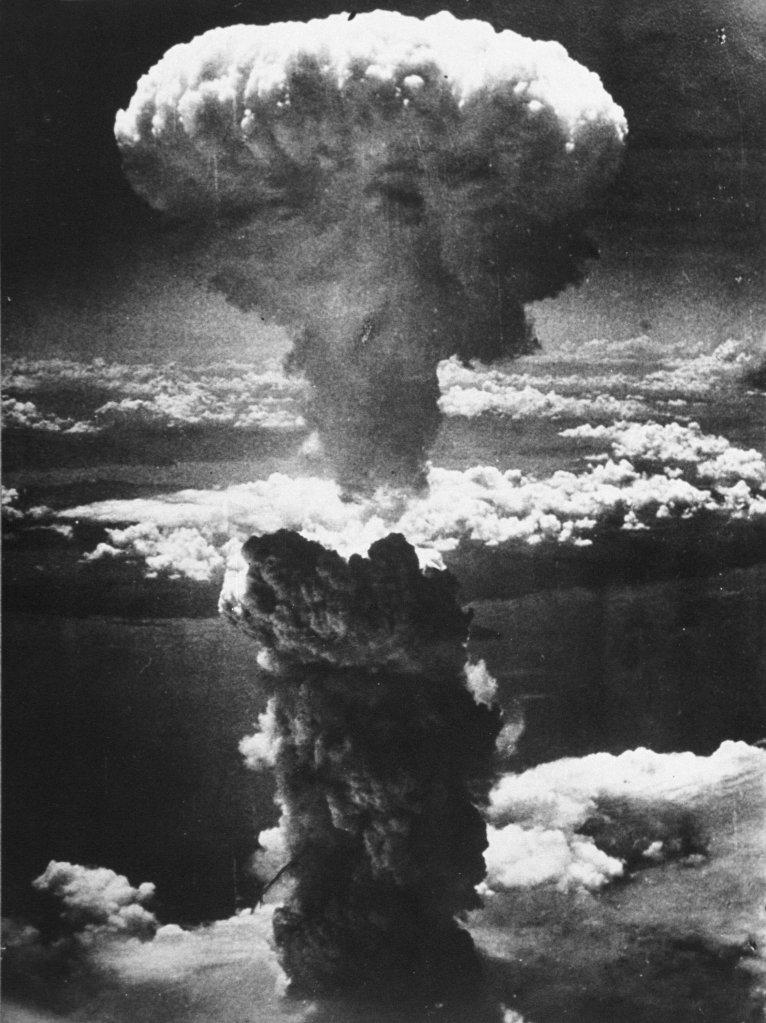
Analysts caution that any use, by any state, would have profound consequences. “If a nuclear weapon were used… it would open up Pandora’s box and would make the U.S. and the world dramatically less safe,” one editor wrote on X, calling it a potential foreign policy error of historic scale if the United States were involved.
Pickaxe Mountain, also known as Kuh-e Kolang Gaz La, sits in central Iran and is believed to be a deeply buried and highly fortified complex. Iranian officials have previously discussed plans to produce centrifuges for nuclear enrichment at a newer facility there. Analysts assess the site could be large enough to house an enrichment plant and supporting infrastructure, although the precise activities remain unconfirmed.
Trump, nuclear weapons, and Iran
What Carlson said
In his X post, Carlson asserted that, under pressure from Israeli Prime Minister Benjamin Netanyahu, the Trump administration may be days away from a nuclear strike on Iran. He named Pickaxe Mountain as the alleged target, claiming Israeli intelligence says Iran has restarted nuclear enrichment there and arguing that conventional U.S. weapons cannot penetrate the site’s granite tunnels.
He further contended that a nuclear strike is the only option and alleged Netanyahu has pushed hard for it for domestic political reasons.
What Trump has said about using nuclear weapons
Trump has repeatedly dismissed the idea of using nuclear weapons against Iran. In April he said, “We don’t need it,” adding that nuclear arms should never be used by anyone. He echoed that view on Aug. 31 when asked again if he would consider such a strike.
Still, he has issued stark warnings, including an April social media post threatening that a “whole civilization will die tonight,” while saying he did not want that outcome.
Experts consulted by reporters judged a nuclear order to be unlikely, though not impossible. Daryl G. Kimball, executive director of the Arms Control Association, said it is not likely but is possible given a president’s sole launch authority, adding that leaders should speak out against any massive strike on Iran.
Hans Kristensen of the Federation of American Scientists called the scenario highly unlikely and warned it would violate the laws of war and damage nonproliferation efforts. Stephen I. Schwartz of the Bulletin of the Atomic Scientists noted Trump has expressed both caution and extreme threats regarding nuclear weapons, making predictions difficult.
What weapon could the U.S. use if Trump ordered a nuclear strike?
The B61-11 is the only air-delivered nuclear weapon in the current U.S. stockpile designed for hardened underground targets. It derives from the B61-7, with a reinforced casing and a rear booster to drive deeper penetration.
Reported maximum yield figures range from roughly 340 to 400 kilotons, and fewer than 100 are believed to remain in the inventory.
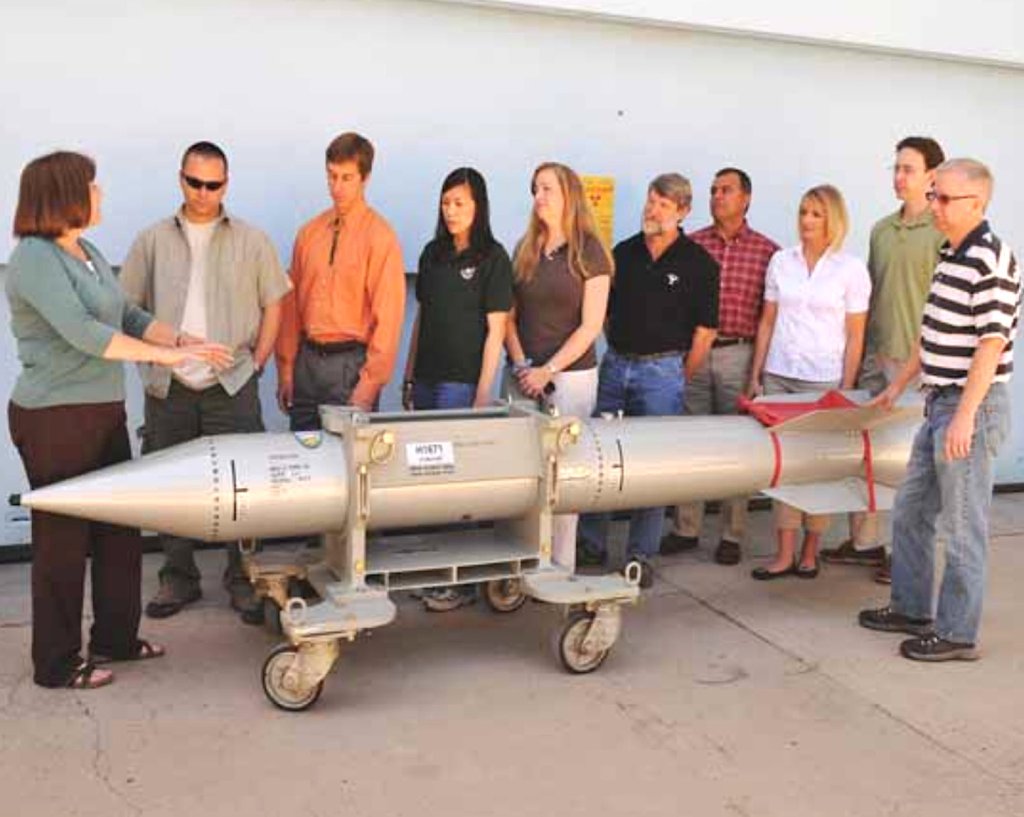
Kristensen said a B61-11 could likely render Pickaxe Mountain unusable, though collateral damage from a 400-kiloton detonation would be significant. He and other analysts also outlined non-nuclear options, such as conventional penetrators to attack access points and infrastructure, along with potential cyber operations.
Schwartz added that ballistic missiles are poor candidates for this mission, given overflight risks and the lack of earth-penetrating warheads on U.S. ICBMs and SLBMs.
Israel maintains an undeclared nuclear arsenal and could theoretically deliver warheads via Jericho ballistic missiles, certain tactical jets, or possibly submarines. Commentators also noted more complex scenarios, including a high-risk special operations raid to place a device inside the complex or the use of a radiological device to contaminate interior spaces, though such operations would be extraordinarily difficult.
What are the alternatives to nuclear weapons?
Trump has publicly suggested a conventional strike on Pickaxe Mountain, describing it in July as suitable for a major blow at the entrance. Experts, however, have long assessed that the main chambers under the site may lie beyond the reach of even the GBU-57/B Massive Ordnance Penetrator, a 30,000-pound bunker buster developed in part to threaten Iranian underground facilities.
Construction at Pickaxe Mountain in recent years appears aimed at countering these threats.
MOPs featured prominently in the June 2025 Operation Midnight Hammer strikes, when 12 were used against Fordow and two against Natanz. At Fordow, six MOPs were aimed at two ventilation shafts in sequence to penetrate deeper into the complex, underscoring the difficulty of defeating such facilities.
It is unknown how many MOPs remain in U.S. stocks, whether comparable features exist at Pickaxe Mountain, or whether similar effects could be achieved there.
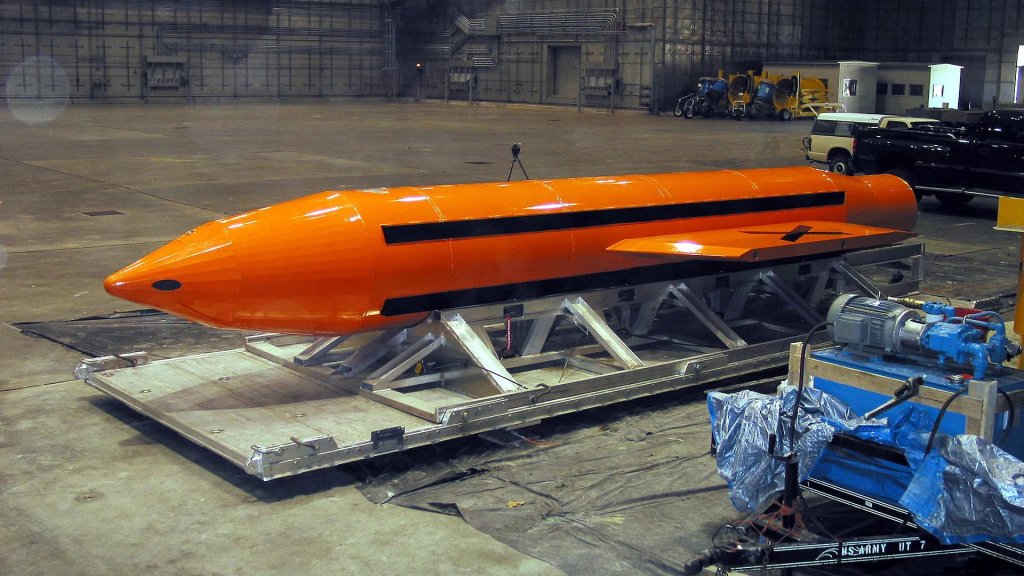
According to news reporting last month, the White House and Pentagon prepared plans to use a GBU-43/B Massive Ordnance Air Blast bomb against military sites in Iran, including Pickaxe Mountain, if ordered. The 22,000‑pound MOAB is a fuel-air explosive, not a penetrator, and is released from C-130 aircraft.
It has been used in combat once, in Afghanistan in 2017. While its overpressure could endanger personnel in open tunnel systems and damage external infrastructure, it is not suited to destroying hardened underground structures.
A direct insertion by U.S. special operations forces is another theoretical option, though experts describe it as far riskier. A deep operation inside Iran could require a substantial force, extended duration, and occupation of key terrain to access interior caverns, depending on defenses and the site’s configuration.
In 2024, Israeli special operators demolished a Syrian underground missile site from the inside using explosives, but replicating that deep inside Iran would be far more complex.
The fallout dangers of using a nuclear weapon against Iran
Kristensen said a B61-11 would excavate and loft large amounts of radioactive material. Using the NUKEMAP simulation tool, he assessed that a surface detonation could drive fallout nearly 300 kilometers downwind, potentially more if the device penetrated rock before detonating, which would exacerbate fallout.
If highly enriched uranium were present underground, outcomes would depend on the specifics of the strike, with material possibly entombed or lofted into the atmosphere.
Schwartz cautioned that claims about safely destroying deep targets with penetrating nuclear weapons are misleading. He cited Cold War test experience, noting that even sealed underground shots sometimes vented, spreading radioactive debris downwind.
Larger yields mean larger venting, and prevailing winds near Pickaxe Mountain could carry fallout across parts of the Middle East, the Caucasus, Central Asia, and South Asia.
Geopolitical risks of a nuclear strike on Iran
Carlson argued that an American nuclear strike would set a precedent that could spur other nuclear-armed states to follow suit, including potential use by Russia in Ukraine, as well as escalatory pressures in South Asia and on the Korean Peninsula. Russian officials have repeatedly rattled the nuclear saber during the war in Ukraine.
Kristensen said the United States has long worked to uphold the post-1945 norm against nuclear use. Breaking that taboo, absent an imminent Iranian nuclear threat to the United States or allies, would risk turning Washington into a nuclear pariah, damaging alliances and emboldening other nuclear powers.
Schwartz warned that a preventive nuclear attack, illegal under international law, would trigger global condemnation, wider proliferation, and severe economic repercussions.
Analysts emphasized that even discussing the scenario matters due to the scale of potential consequences. They warned that nuclear use would erode U.S. moral authority, collapse key alliances, and leave the world closer to the brink by default.
There is no direct evidence that Trump is considering nuclear use against Iran. Still, airing the strategic, humanitarian, and geopolitical stakes is valuable in a period of heightened uncertainty, particularly if the notion has been raised inside government deliberations.
In recent years, U.S. defense planning has increasingly focused on advanced strike capabilities, from bunker-busting munitions to next-generation systems such as those detailed in Air Force awards hypersonic missile production contract. These developments shape the broader debate over how Washington signals deterrence without crossing the nuclear threshold.