
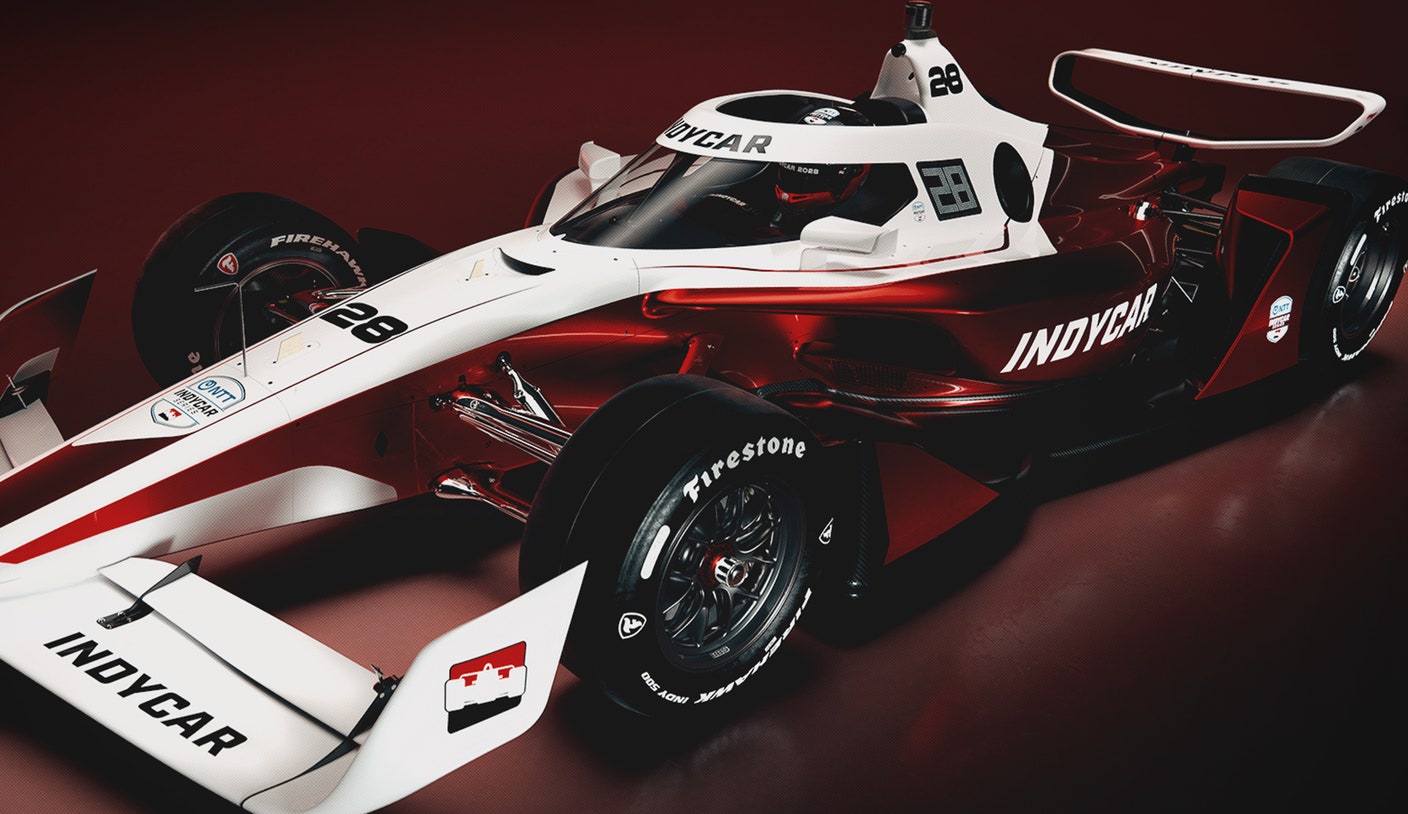
INDYCAR HEADQUARTERS (Indianapolis) — The 2028 INDYCAR car made its public debut to reporters this week, and there is plenty to like. While the version shown will continue to evolve before its first season, the series outlined a clear path to launch and highlighted key upgrades designed to be faster without compromising safety.
With roughly 19 months until race duty, the car will undergo further refinements. Initial track testing begins this weekend, with Alexander Rossi driving Saturday and Alex Palou on Sunday.
The prototype will not use the new race engines, as Chevrolet and Honda are still developing their power units. Instead, it will run a shelved 2.4-liter V-6 developed several years ago. The hybrid system will also be inactive during these early runs.
Officials said data collected over the coming months will shape final adjustments before components move into mass production. A full-field test is not expected until after the 2027 season.
“This weekend is just some very basic metrics that we need to get off the car. Lap time is not even on our radar just yet,” INDYCAR VP of Competition and Race Engineering Mike O’Gara told reporters. “For a brand-new car, you really need to make sure it starts, it steers, and it stops.”
Development is already well advanced. The chassis shown is about 100 pounds lighter than the current model and integrates lessons learned over the past decade.
Here are eight elements of the 2028 INDYCAR car that stand out on first look.
2028 INDYCAR car: LED lights
A refreshed LED panel system will display a car’s position on track and potentially pit stop times. A previous attempt to retrofit lights onto the current car ran into heat and vibration issues that affected reliability.
This time, the lighting has been engineered into the new chassis from the outset, with anti-vibration measures and a more robust panel developed with Dallara. Similar systems are used in other series such as IMSA, and officials said it should improve fan awareness during races.
Front wing on the 2028 INDYCAR car
The front wing retains a distinctly INDYCAR profile. At Indianapolis Motor Speedway, paired with larger curved sidepods, the design is intended to improve airflow for cars running several positions back in the draft, aiding passing opportunities.
The lower nose stance accentuates the look while serving aerodynamic goals.
It is sleek
The bodywork appears narrower and cleaner than the current car, which has accumulated add-on pieces since its 2012 debut. According to O’Gara, INDYCAR focused on reducing lift in various yaw attitudes and integrated past fixes, such as tire ramp flaps and undertray devices, into the fundamental shape.
Removing these bolt-ons simplifies the car while maintaining stability in spins or backward slides.
Aeroscreen and halo refined
The aeroscreen and halo are now fully integrated, giving the cockpit a more compact, fighter jet aesthetic. O’Gara noted that the windscreen and cockpit “fit better” when viewed head-on, reducing bulk while preserving protection.
Clear rear panel
A transparent panel at the rear allows a view of the engine cover and will showcase engine manufacturer branding. Fans viewing cars on the grid will also glimpse a small section of the suspension beneath the bodywork.
Steering wheel and fewer knobs
Controls have been consolidated onto the steering wheel, decluttering the cockpit and improving safety by reducing the need for drivers to remove a hand. Electronic anti-roll bars will be actuated via steering wheel thumb wheels, with teams choosing the specific configuration.
The cleaner layout also lessens the chance of drivers striking their hands on cockpit hardware.
Bigger cockpit
The cockpit has been enlarged to accommodate a wider range of driver sizes and to improve comfort. Additional padding enhances safety, and although the seat itself does not move, key controls can be repositioned toward the driver.
Officials also expect reduced in-cockpit heat compared with the current car.
Cool factor
Heat management has been rethought. The existing cool suit infrastructure is integrated, and multiple airflow paths target the driver area.
Helmet cooling will route through the radiator ducts, with additional airflow from the top shock cover and an inlet beneath the car’s boat-shaped tub directing air under the steering column and onto the driver. The aim is to lessen the oven-like conditions drivers report during long stints.
Looking ahead, INDYCAR plans to deliver cars to teams around June next year. According to O’Gara, testing will be coordinated across the paddock, with one car per team to begin once the 2027 INDYCAR season concludes.
The new chassis will join a crowded sports calendar that already includes major international events such as the 2026 3M Open. Series officials hope the updated design will help INDYCAR stand out with fans and manufacturers alike.