
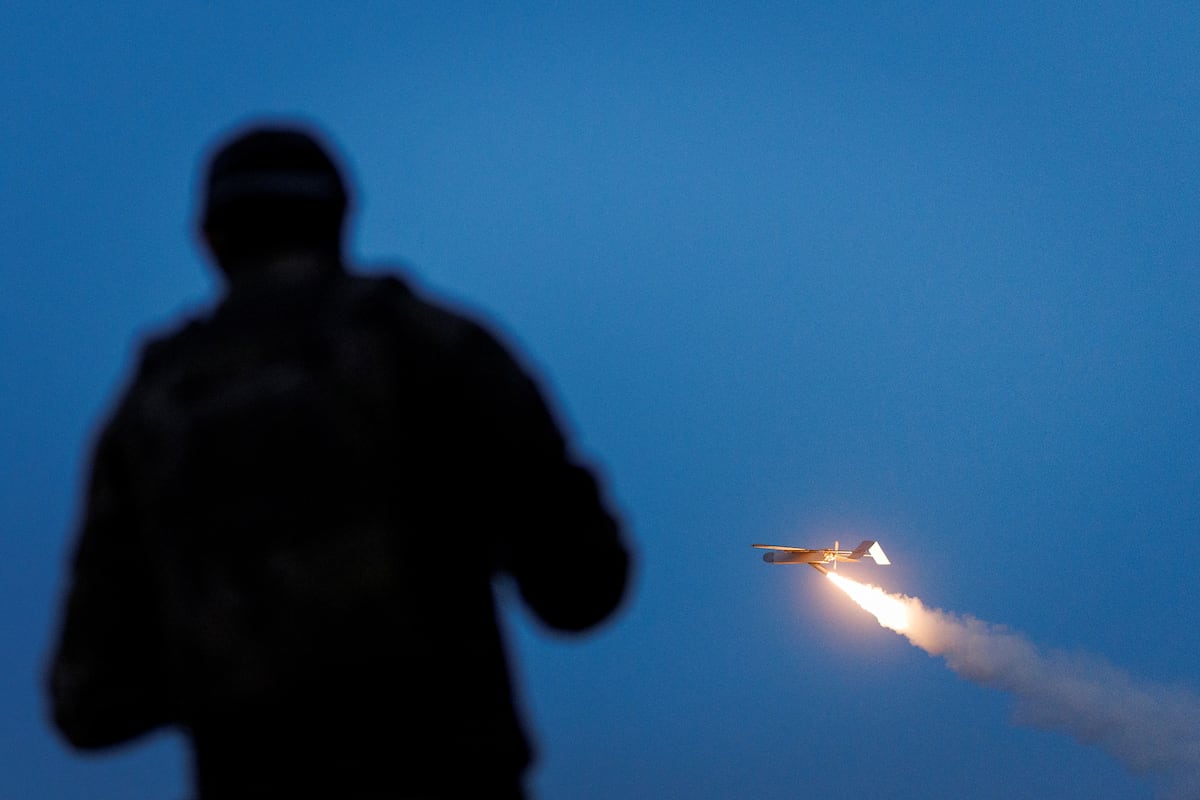
On a southern Ukrainian steppe, a Ukrainian drone unit prepared a sleek gray strike drone for a mission against Russian ships in the Black Sea, part of a broader effort to isolate Crimea and undermine Moscow’s logistics. The Ukrainian drone unit has been operating far from the front, where such teams say they have struck more than 180 vessels and other maritime targets around the peninsula in the past three weeks, opening a new axis in the conflict.
The latest wave of attacks began in the Sea of Azov and has moved into the Black Sea, according to Ukrainian units involved. The goal is to raise the costs of Russia’s occupation of Crimea and shift momentum toward Kyiv in the fifth year of full-scale war.
“We work day and night, every day, without time off,” said a battalion commander using the call sign Ray from Magyar’s Birds, a brigade that plays a central role in the campaign. During a recent visit by journalists, his team launched drones every few minutes. The unit said it struck a cargo vessel and floating crane in the Black Sea and a power substation in southern Crimea. These claims could not be independently verified.
The maritime strikes are unfolding alongside intensified Russian attacks on Ukrainian ports and commercial shipping in recent weeks. Ukraine’s agriculture minister said Thursday that shipowners had temporarily halted vessel arrivals at Black Sea ports for agricultural exports following the uptick in strikes.
Battle over Crimea and the Black Sea
Crimea, a transit and military hub for Russian forces, has become a priority for Ukraine’s expanding drone operations. In recent months, Ukrainian strikes have targeted road and rail lines across occupied southern areas that connect the peninsula to Russia. Moscow seized and annexed Crimea in 2014, years before its full-scale invasion of Ukraine in 2022.
Those attacks have contributed to fuel shortages and an emergency situation in Crimea, with systematic strikes on power and gas infrastructure, according to Ukrainian accounts. More recently, attacks on oil tankers, bulk carriers, and other vessels signal a broader push to squeeze Russian logistics at sea.
Since this new phase began in July, forces under commander Robert “Magyar” Brovdi have reported hitting about six vessels a day, updates that he has shared in regular posts. The strikes have disrupted Russian shipping in the Sea of Azov, which connects to Russia’s main southern grain region via the Don River. Brovdi’s unit said the Kerch ferry link between eastern Crimea and Russia’s Krasnodar region has lost about 75 percent of its capacity. This could not be confirmed independently.
The commander said the effort aims to “ruin the myth” of Russian dominance and assert full control over Ukraine’s territorial waters. The campaign has been labeled “Molochko,” a play on words that sounds like “milk” and stands for the phrase “Moscow will collapse because of Crimea.”
Sidharth Kaushal, a senior fellow at the Royal United Services Institute in London, said that earlier Ukrainian strikes on Russian overland logistics prompted more reliance on Sea of Azov shipping, creating additional maritime targets. He described the current operations as a logical continuation of Ukraine’s Crimea-focused strategy.
Russian attacks on ports and vessels
Russia has escalated strikes on southern Ukraine in parallel, concentrating on Odesa and other ports that handle much of the country’s grain exports via a maritime corridor. Ukrainian officials said that on Sunday ten sailors were killed when Russian forces struck a Guinea-Bissau-flagged vessel loading corn at Odesa. At least three people were killed in attacks on Odesa and the port city of Mykolaiv last week.
In the first two weeks of July, Russia struck Ukrainian ports 23 times and civilian vessels 17 times, the country’s seaports authority said. The disruptions have complicated trade, particularly for agricultural products such as grains and vegetable oils, which remain Ukraine’s top source of foreign currency earnings. More than 90 percent of those exports move through Odesa region ports via the maritime corridor. Russia has said its targets are sites storing military cargo and fuel.
Hunted by Russians
The FP-1 and FP-2 drones used by Ray’s team are Ukrainian-made and have become a fixture of Kyiv’s arsenal. They fly autonomously toward target areas, then remote pilots, often positioned far away, guide them onto final approach. Minutes after launching their last propeller-driven drone with a small jet-assisted booster, the team dismantled the site and prepared to relocate. Launch points are never reused, and crews are frequently shifted on short notice.
Technological gains allow launches from more than 100 kilometers, or 62 miles, behind the front. Even so, these teams remain high-value targets for Russian drone hunters. “This is a constant war, a continuous struggle of measures and countermeasures,” said Ray, who leads his brigade’s ninth battalion, known as Kairos.
A squadron commander using the call sign Panama said troops are driven by the “tangible results” of their missions. Beyond complicating Russian logistics, the campaign has lifted Ukrainian morale. “It’s great that our tempo is so high,” he said, “but we still need to sustain it.”
The maritime strikes take place in waters that are also vital for commercial shipping and global food supplies, as Odesa remains a key hub for grain exports through the Black Sea maritime corridor. The disruption to ports and shipping has drawn close attention from international organizations monitoring food security.
Ukraine’s defense industry has rapidly expanded production of systems such as the FP-1 and FP-2, complementing other advanced platforms including modern fighter aircraft as Kyiv pushes for broader military support under measures like the 2027 NDAA. These efforts have underscored the importance of sustaining aid flows and training pipelines for Ukraine’s forces.
Alongside unmanned systems at sea and on land, Ukraine continues to work with partners such as NATO to coordinate strategy and enhance its defensive capabilities. The evolving tactics on the steppe and in the Black Sea highlight how both sides are adapting to technological change in modern warfare.