
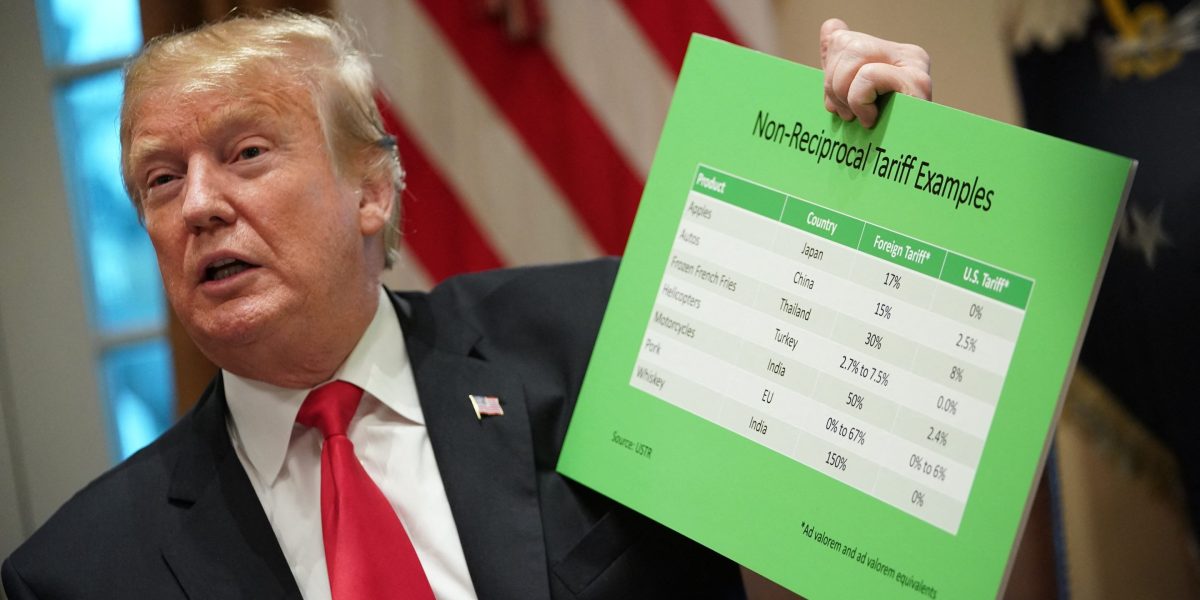
The CBO deficit forecast 2026 has been revised upward to $2.1 trillion as evaporating tariff revenues widen the gap, according to the Congressional Budget Office’s Monthly Budget Review released Monday.
CBO said the new projection, up from $1.9 trillion estimated in February, reflects the impact of the Supreme Court’s February 20 decision invalidating the administration’s use of the International Emergency Economic Powers Act to levy tariffs. The agency noted that spending is tracking close to its February baseline, so the deterioration is driven largely by weaker receipts.
Customs duties and tariff collections in 2026 are now expected to be $250 billion below prior estimates. CBO attributed the roughly 60 percent shortfall to the ruling, which triggered substantial refunds. Stronger income and payroll tax receipts, about $75 billion above the February baseline, offset part of the decline. Other revenue sources are running $25 billion below projections, leaving an overall revenue gap of approximately $200 billion.
“We’ve borrowed an astounding $1.8 trillion this fiscal year, with $431 billion in the month of July alone, and equating to nearly $6 billion per day,” said Maya MacGuineas, president of the Committee for a Responsible Federal Budget. “We’re on track to surpass $2 trillion in borrowing this fiscal year despite not being in a recession. That is not normal.”
A tariff regime in flux
The administration has shifted legal authorities to maintain some tariff revenue after the ruling. It first relied on Section 122 of the Trade Act of 1974, a temporary measure that expired July 24, then moved to tariffs under Section 301. CBO expects the new approach to recover a substantial share of lost revenue, though not all.
The reversal is evident in monthly data. Net customs duties, which had exceeded last year’s totals through April, turned negative in May as refunds began. In July, refunds outpaced collections, with $36 billion returned against $26 billion in gross receipts, producing a $9 billion net outflow for the month. CBO said about $100 billion has been refunded on duties originally collected under the invalidated IEEPA authority.
“Incredibly, such an enormous level of borrowing barely scratches the surface of our fiscal deterioration,” MacGuineas said. “We are about to hit the sobering milestone of $40 trillion in gross national debt, and things are only likely to get worse.”
She urged lawmakers to aim for deficits near 3 percent of GDP and to establish a bipartisan commission to reach that target. “We can no longer afford to put off the difficult decisions – the time to act is now.”
Deficit already running hot
The tariff shortfall adds to an already weakening fiscal picture. For the first 10 months of fiscal 2026, the deficit reached $1.8 trillion, CBO reported, $169 billion wider than the same period a year earlier. Adjusting for a payment-timing shift from August to July, the year-to-date shortfall was $71 billion larger than in fiscal 2025.
July posted a $431 billion deficit, up $140 billion year over year. Total receipts fell by $5 billion, or 1 percent, even though income and payroll tax collections rose $31 billion, or 11 percent, because the reversal in customs duties more than offset those gains.
Where the money went
Entitlement programs continued to drive outlays. Through the year to date, Social Security spending increased by $70 billion, or 5 percent. Medicare rose $66 billion, or 8 percent. Medicaid climbed $45 billion, or 8 percent. Combined, those programs added $181 billion, or 7 percent. Net interest costs rose $117 billion, or 14 percent, reflecting higher debt levels and long-term rates.
Other notable shifts included:
- Department of Education outlays fell $79 billion, or 60 percent, driven by a $53 billion net reduction in estimated student-loan costs in June 2026, compared with a $24 billion increase recorded in July 2025.
- Department of Housing and Urban Development spending rose $17 billion, or 43 percent, due to the absence of a 2025 downward revision in estimated housing loan guarantee costs.
- Environmental Protection Agency outlays declined $20 billion, or 59 percent, reflecting lower clean-energy grant disbursements.
- Small Business Administration spending increased $10 billion after the agency raised its cost estimate for outstanding disaster loans.
- Defense Department military spending grew $39 billion, or 5 percent, on personnel and research and development. Department of Veterans Affairs outlays rose $34 billion, or 11 percent, due to more beneficiaries and higher per-person costs.
On the revenue side, corporate income tax receipts fell $89 billion, or 23 percent, which CBO linked to expanded deductions for corporate investment that outweighed underlying gains in corporate income.
The bigger picture for the CBO deficit forecast 2026
The report highlights how closely the fiscal outlook is now tied to tariff policy and how vulnerable that revenue is to legal and political shifts. Earlier this year, tariffs were promoted as a meaningful offset to tax-cut costs. The Supreme Court ruling upended those assumptions, and the replacement measures leave the durability of tariff revenues uncertain heading into fiscal 2027.
The Congressional Budget Office analysis comes as households and investors are already navigating a shifting interest rate environment, including changing returns on savings vehicles such as best CD rates today.