
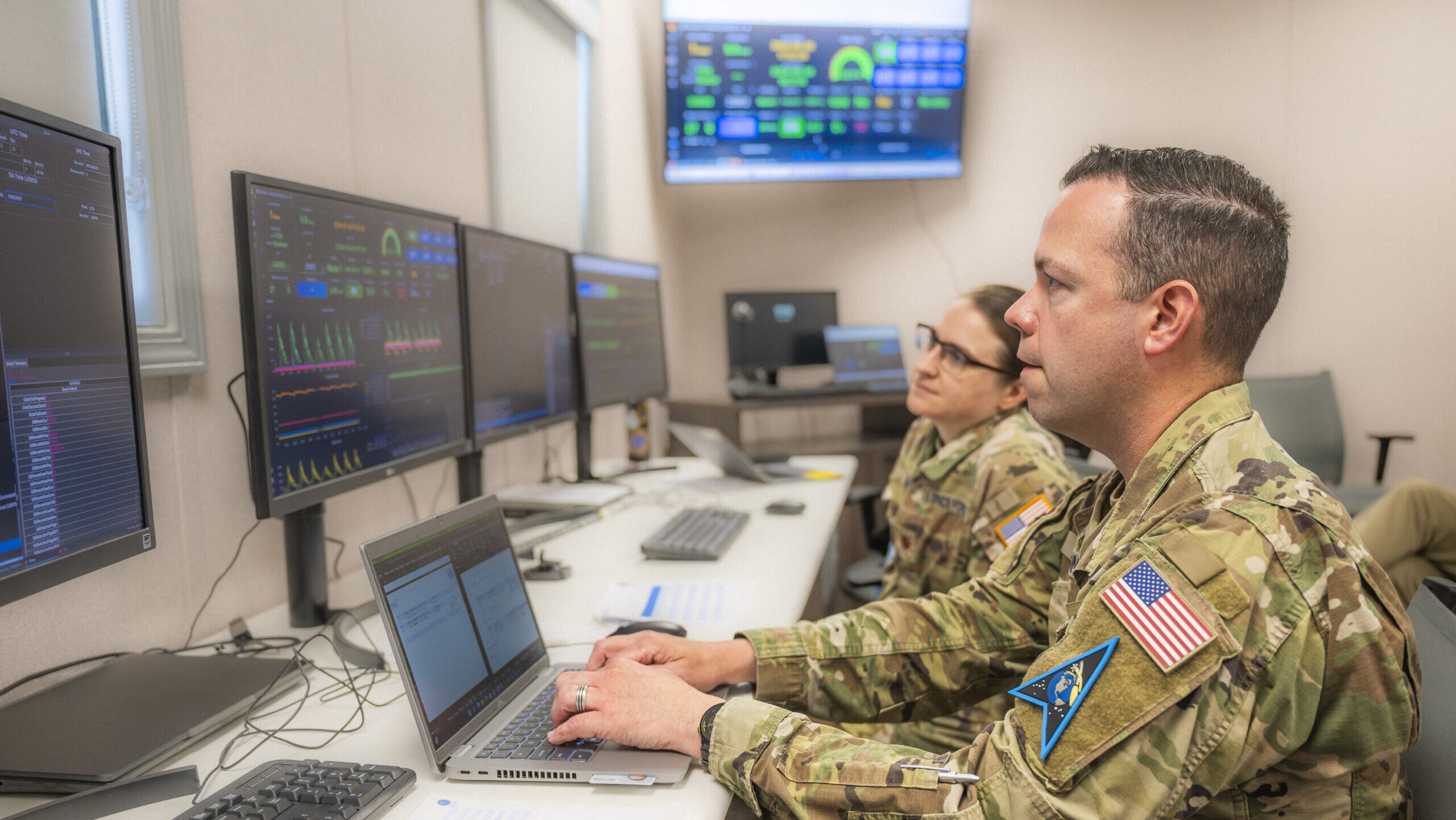
Space Force training capabilities are set for a major expansion as the service selected 15 companies to compete for a $981 million, five-year contracting pool designed to speed advanced tools and infrastructure to Guardians, according to Space Systems Command.
The vehicle, formally titled the National Space Test and Training Complex Innovative Technology & Engineering — Space Test and Range Capability Development, is a multiple-award indefinite delivery, indefinite quantity contract intended to accelerate delivery of modern training solutions so Guardians are prepared to face peer adversaries.
The companies eligible to compete for task orders are Amentum Technology, BAE Systems, CACI, Firefly Aerospace, L3Harris Technologies, Lockheed Martin Space, Northrup Grumman, Pacific Crest Alliance, Parsons Government Services, Redwire Space Missions, Rocket Lab USA, Sierra Space Corporation, Boeing, Viasat, and York Space Systems.
Managed by SSC’s System Delta 81 in support of Space Training and Readiness Command, the NITE-STAR effort will underpin the service’s broader Operational Test and Training Infrastructure program. The OTTI architecture will include physical infrastructure, simulators, and live assets such as spacecraft, and now falls under the Space Force portfolio acquisition executive office for infrastructure.
Space Force training capabilities gap drives push
Senior leaders have raised alarms over shortfalls in instructors, facilities, and simulators as the force and its mission sets grow. Lt. Gen. Greg Gagnon, who leads Combat Forces Command and is responsible for providing ready forces to U.S. Space Command, said during a July 17 appearance at the Mitchell Institute that the service still faces notable simulator gaps across key mission areas.
Gagnon said the need for simulators is acute, since otherwise operational systems such as space tracking radars or GPS satellites must be taken offline to support training. He noted ongoing work with Chief of Space Operations Gen. Chance Salzman, Maj. Gen. James Smith of Training and Readiness Command, and SSC leaders to assess the landscape, describing progress as a “mixed bag.”
According to Gagnon, simulated training for missile warning and tracking is strong and effectively earns a “green checkmark.” For orbital warfare, Delta 9 still relies largely on real mission equipment, but the service has funded simulator requirements and is “on the glide path” to a similar rating.
By contrast, he said simulators for space domain awareness and intelligence remain scarce. Those deltas depend on multiple specialized systems that must be integrated for training, leaving both areas “red-Xed” for now.
The companies eligible to compete for task orders include major defense contractors such as Boeing, underscoring the Pentagon’s broader push to modernize test and training infrastructure across domains.